







Status, agent, officers, and address decay at different rates. Which staleness class corrupts which decision, and when a cached record is still the right call.
Vendor sandboxes reward happy-path demos. A procurement checklist that tests failure paths: slow states, error shapes, expiry behavior, and support response.
Coverage is a matrix of state, field, latency, and freshness. A weighted scoring rubric for evaluating what an SOS API actually returns where you lend.
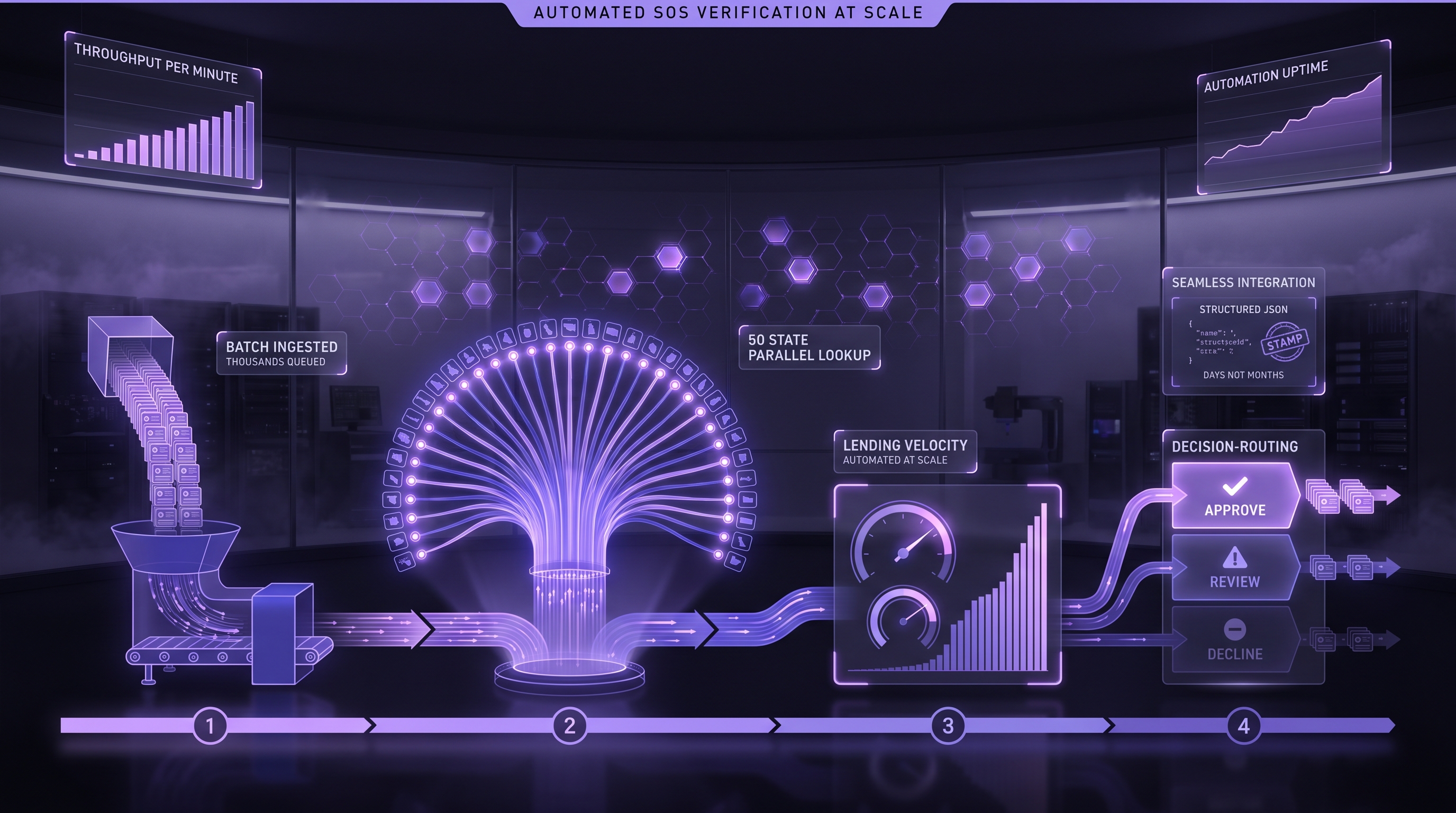
There is no single US corporate registry. How 50-plus Secretary of State systems work, and how an aggregating API turns them into one integration.
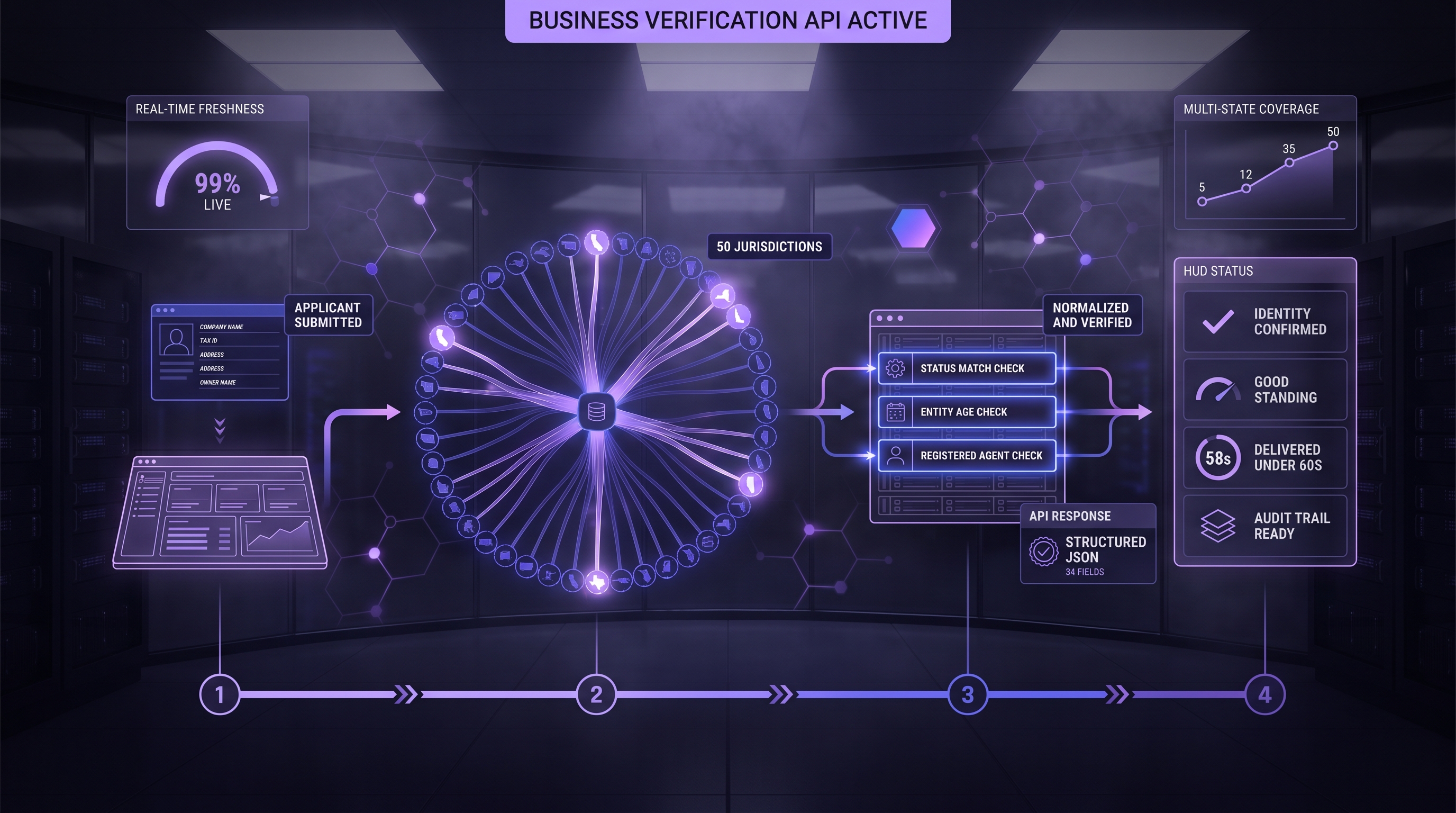
Existence, status, standing, registered agent, and officers: what an entity validation API checks, field by field, and what each field means for underwriting.
Lookup and search are different retrieval operations with different failure modes. Which one your workflow needs, and what each does to your match rate.
Resolve the entity, read the status field, handle slow states, and capture evidence an auditor can replay. The four operations behind one verification call.
Point-in-time rechecks keep filing status current without a monitoring platform. Trigger design, retry mechanics, and when to hand off to continuous detection.
The Ninth Circuit locked in $23 billion of borrower-defense relief the same month Grad PLUS ended. A roughly $15 billion a year federal market now belongs to private and state lenders, on private terms.
Access Real-Time Secretary of State Data and Automate your underwriting process. We help Alternative Funders work smarter through AI Technology. Get our FREE AI Tools here
Subscribe to our Newsletter!