Find the Cobalt articles that fit your question. Explore a topic, start with a useful example, or browse every article below.
READ BY TOPIC
A GOOD PLACE TO BEGIN
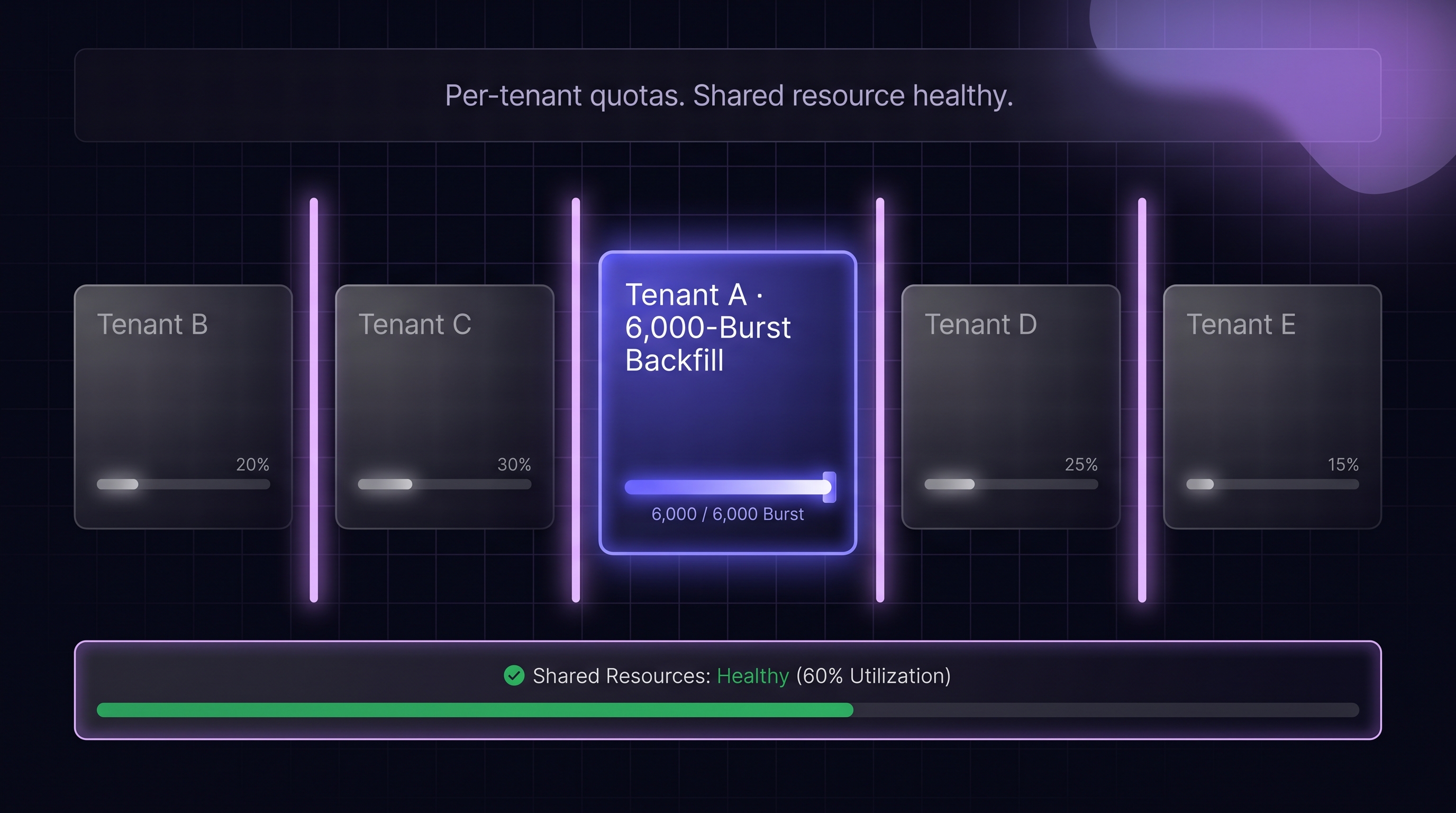
Platforms that embed KYB verification as a feature for downstream customers inherit every verification failure at N times the scale. Here is how the architecture has to change when you go from single-tenant underwriting to multi-tenant verification infrastructure.
Payment-data underwriting beats bureau-pull through cycle
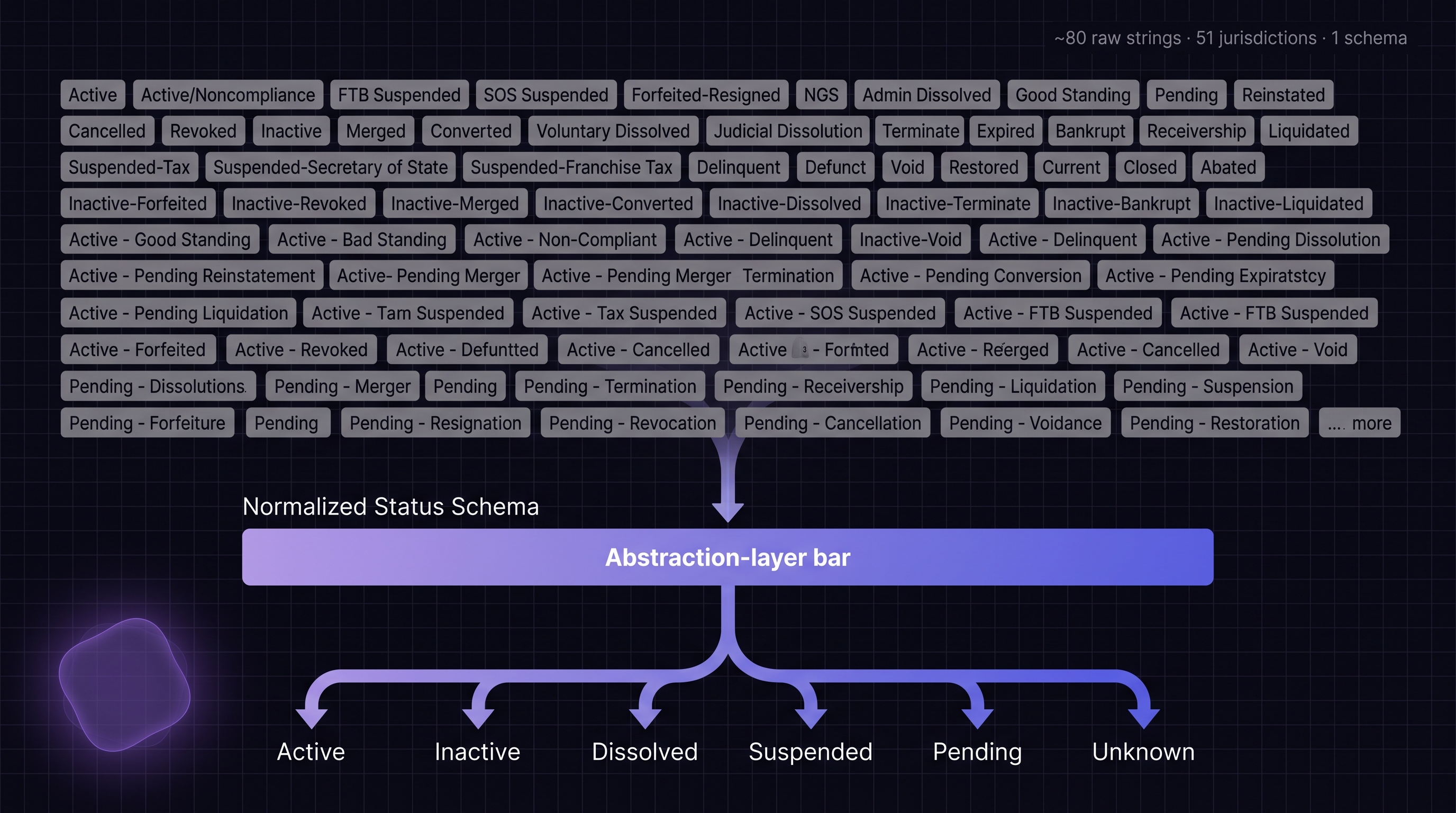
Every state's Secretary of State registry uses its own status vocabulary. 'Active' in one state is 'Good Standing' in another and 'Current' in a third. Your verification layer either normalizes cleanly or accumulates silent underwriting drift. Here is the data-model playbook.
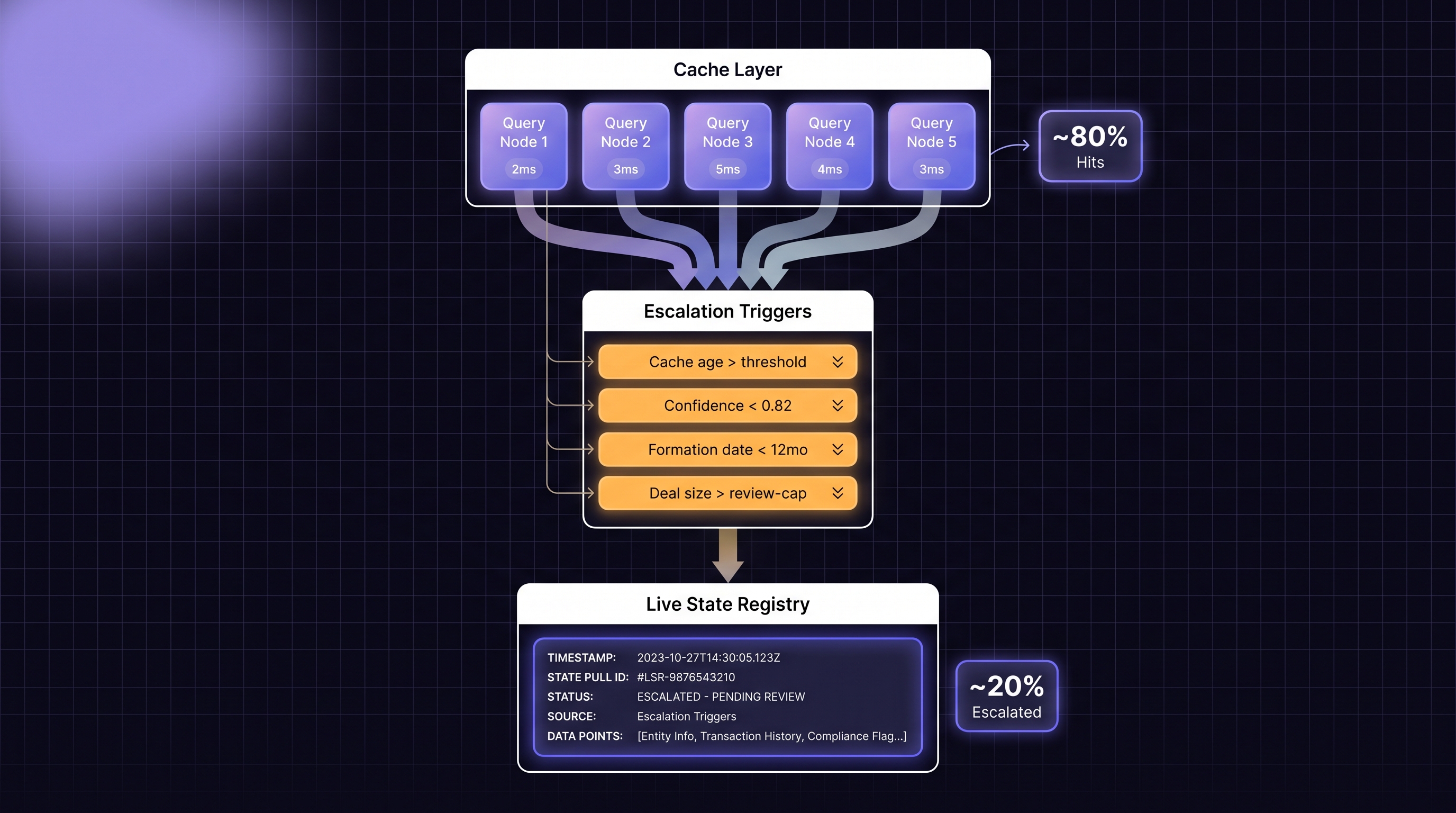
Pure cache verification is cheap but stale. Pure live-ping is current but slow and expensive. A production waterfall routes each application to the right path based on deal risk, entity lifecycle, and state mix. This post is the architecture playbook.
Jan 2028 compliance, 9 state regimes still demand pipes
Delaware does not push business name changes into standard data feeds. Oregon runs a slow registry. New Jersey restricts some status data by statute. State-level quirks compound inside static-feed architectures and create verification blind spots invisible to vendor APIs. Here is the state-by-state map.
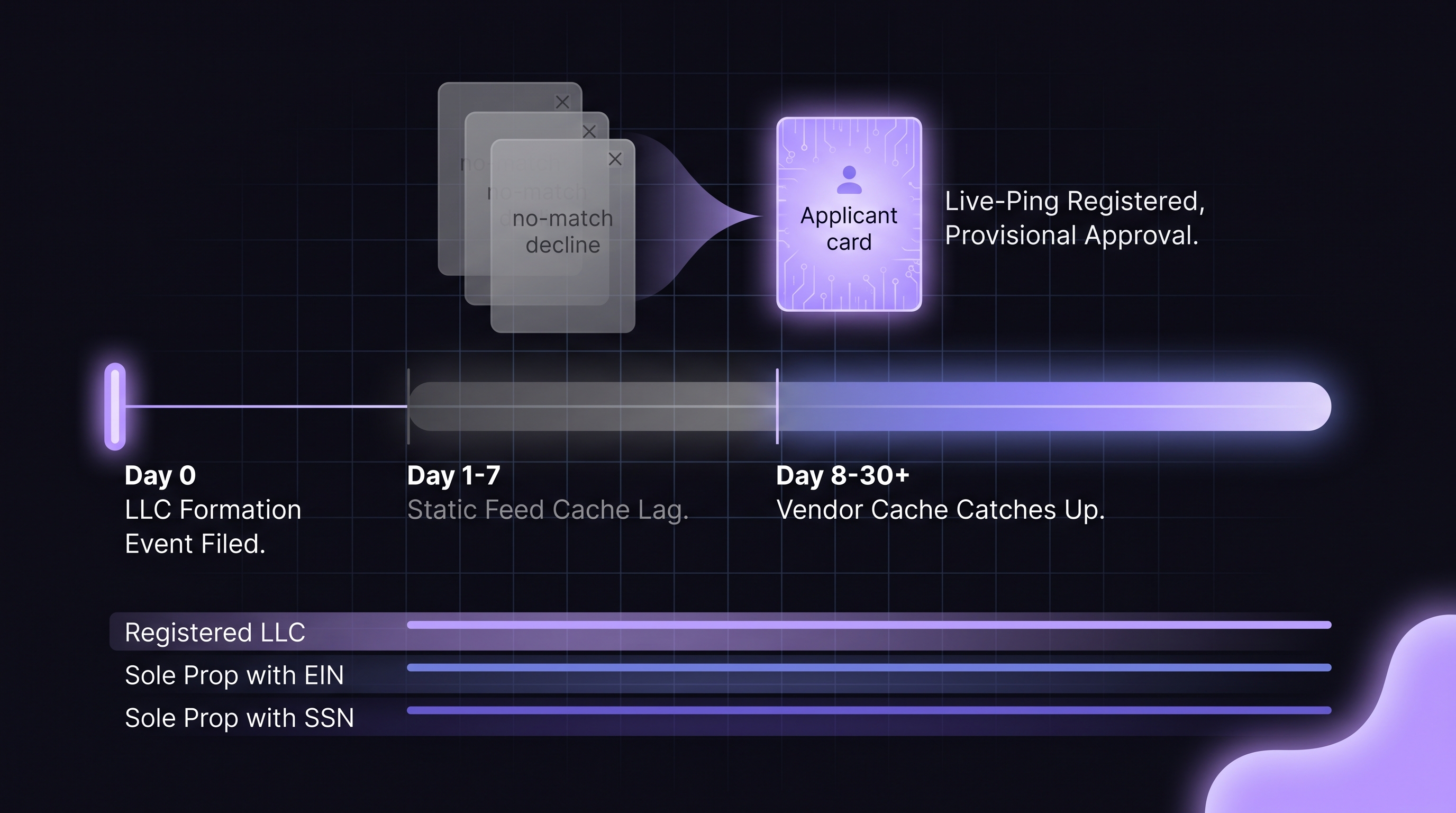
Newly-formed businesses and sole proprietors are the hardest segment to verify at onboarding. Static feeds miss them, fraud rings target them, and state lender-licensing policy requires fast decisioning anyway. Here is the verification playbook.
Third Charter Race Filing in 60 Days. Cheapest of 4 Fintech-Bank Buy
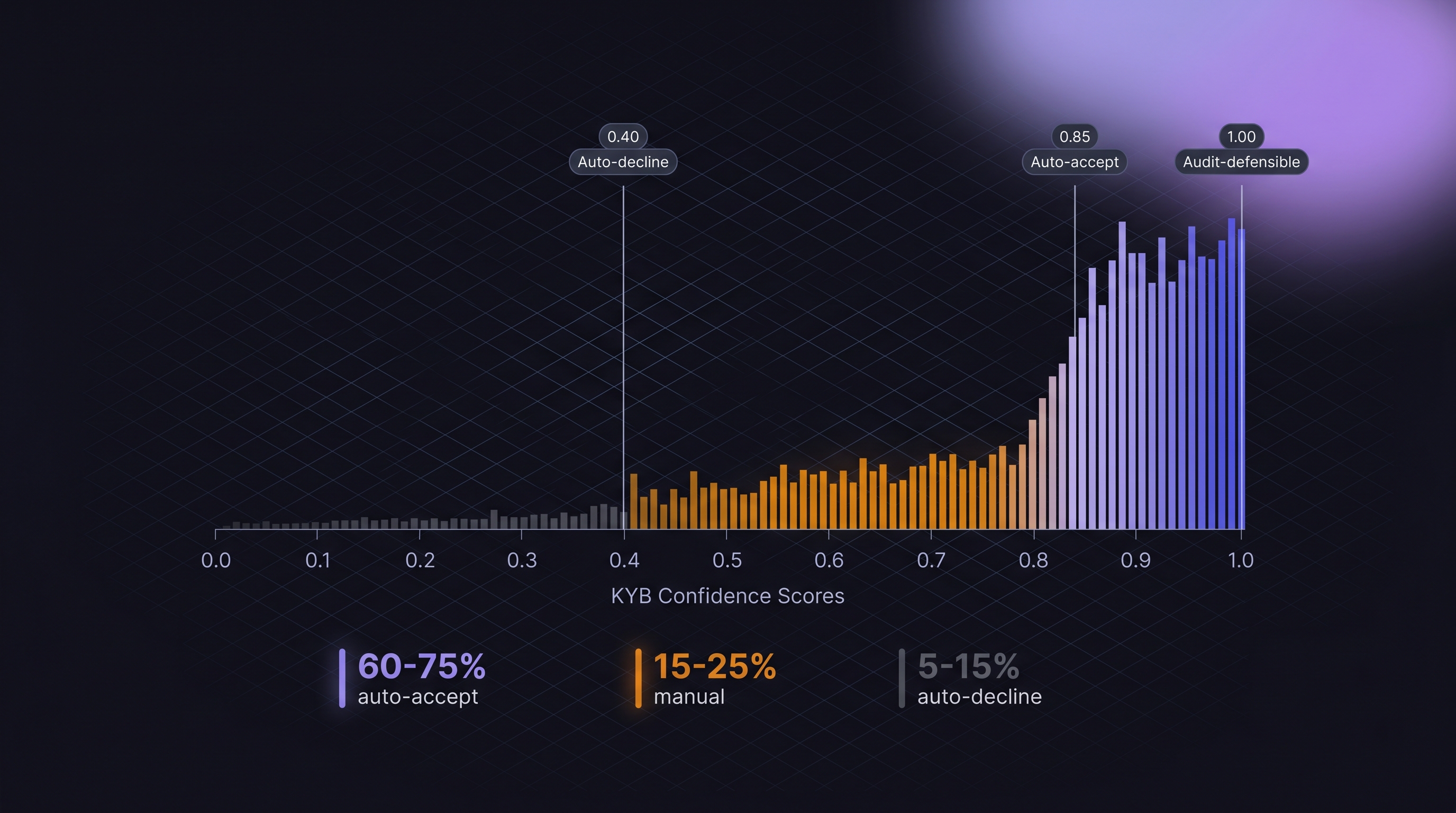
Binary match-or-no-match decisioning routes too many ambiguous cases to manual review and misses signal in the borderline band. Confidence-scored decisioning with tiered auto-accept, human review, and decline thresholds is the production pattern. Here is how to design it.
Unanimous senior consent gives one group full blocking power