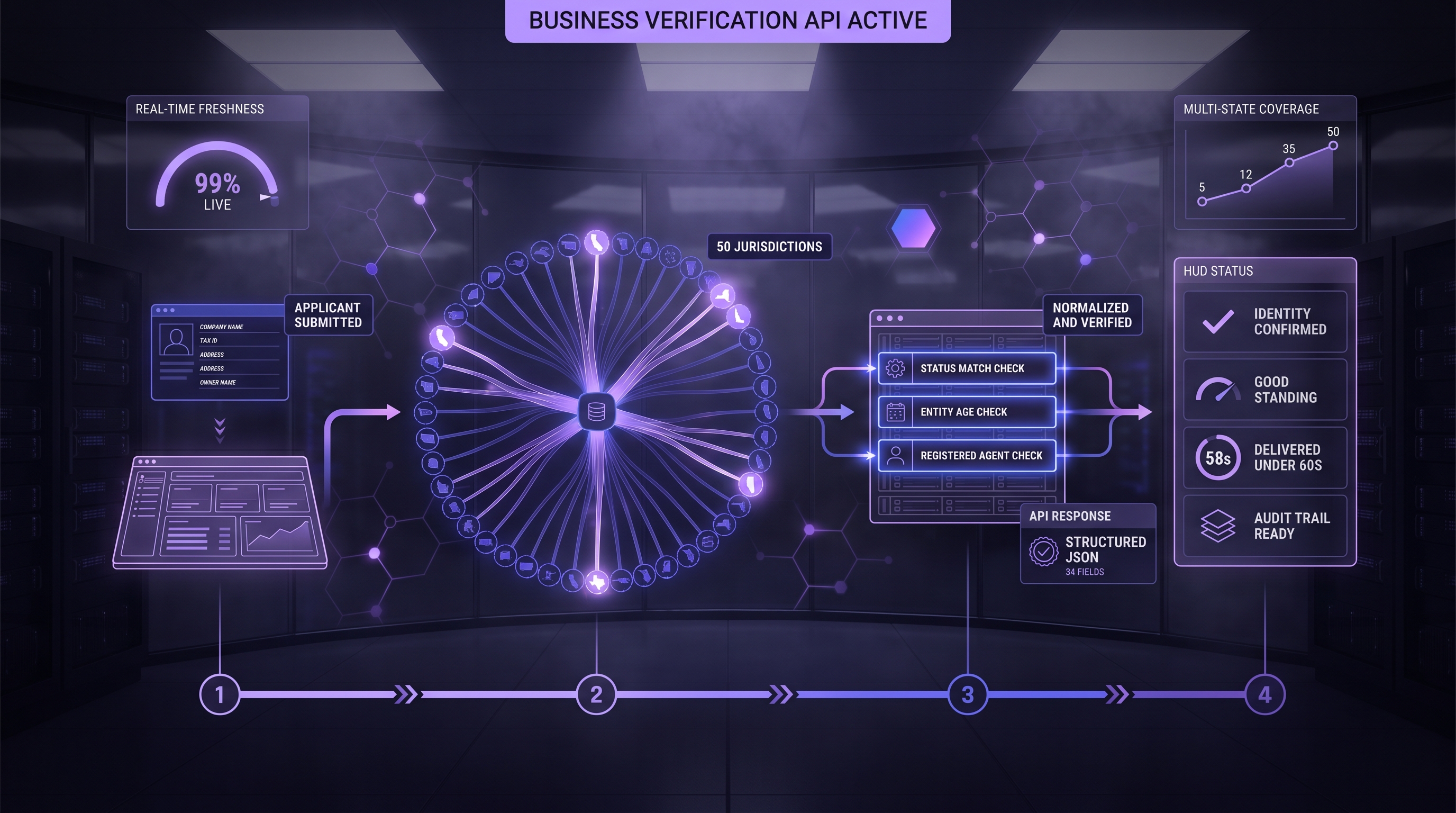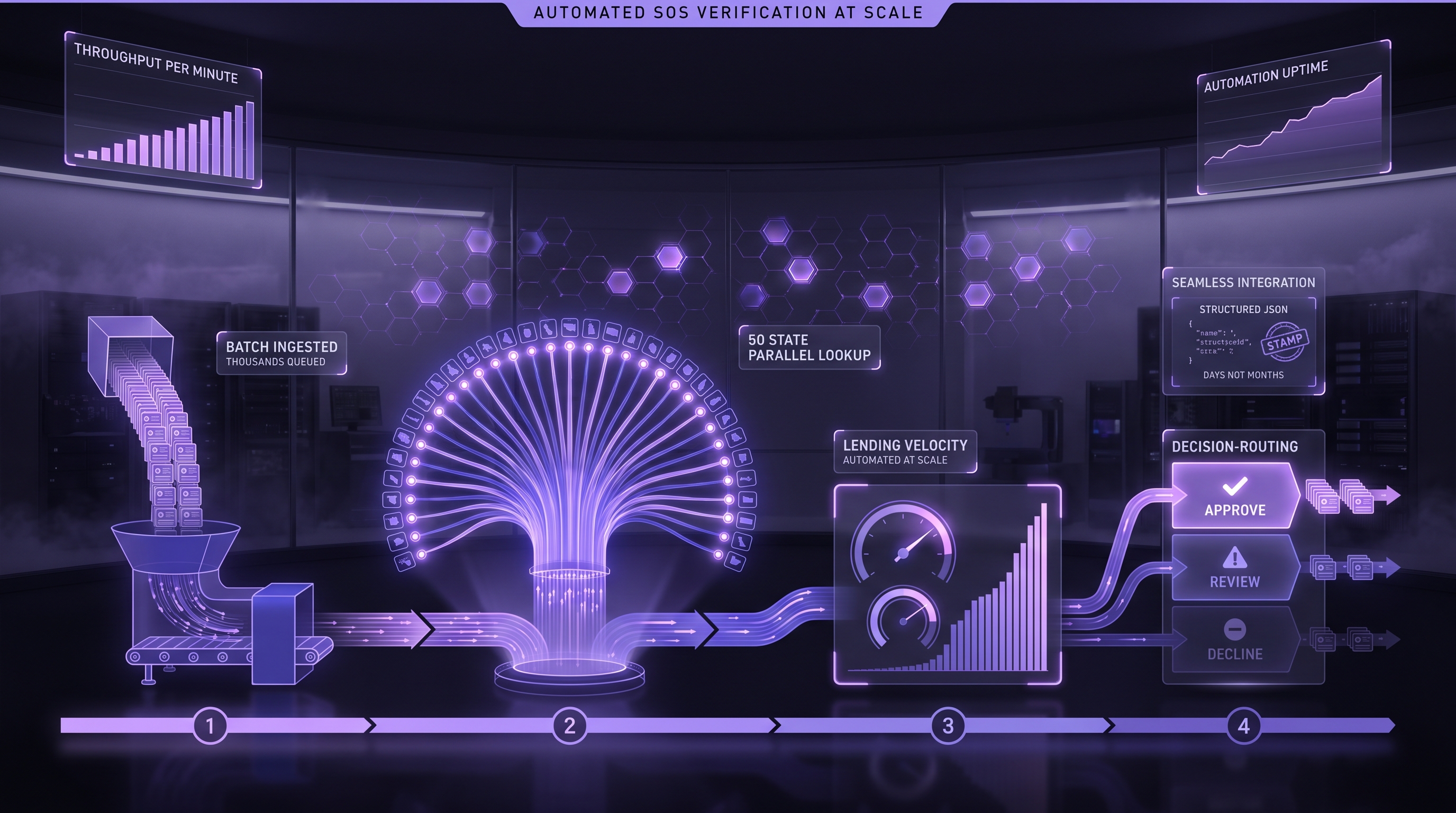







Binary match-or-no-match decisioning routes too many ambiguous cases to manual review and misses signal in the borderline band. Confidence-scored decisioning with tiered auto-accept, human review, and decline thresholds is the production pattern. Here is how to design it.
A no-match from a business verification vendor is ambiguous by default: it might mean the entity does not exist, or it might mean the vendor's feed has not caught up. This post covers what a true negative actually is, what examiners want to see, and how to build a decline policy that survives audit.
Static Secretary of State data feeds lag real-world registry changes by days or weeks, creating false no-matches that route legitimate deals into manual review or decline. This is what that costs alternative lenders at volume and what real-time lookup actually changes.
Top 10 alternative credit data providers U.S. lenders should know in 2026, what each offers, and how to layer them with primary-source entity verification.
How lenders navigate 51-jurisdiction Secretary of State coverage, compare cached vs live verification, and track cross-state business registrations.
Missouri's 13 business entity statuses and what each one means for alternative lenders evaluating borrower risk, compliance, and creditworthiness.
Technical how-to for integrating OFAC screening APIs into lending workflows. SDN list mechanics, fuzzy matching, false positive handling, real-time vs batch.
How construction lenders and equipment financiers use contractor license verification APIs to automate state-level checks and build audit-ready workflows. 2026 guide.
An OFAC sanctions screening API resource for alternative lender compliance teams. Confidence scores, threshold policies, vendor comparison, RFP questions. 2026 guide.
Access Real-Time Secretary of State Data and Automate your underwriting process. We help Alternative Funders work smarter through AI Technology. Get our FREE AI Tools here
Subscribe to our Newsletter!