





Construction lending needs license, lien and litigation checks. Coverage for the three differs by state, and New York is where all three overlap from a single provider.
UCC filings and court judgments mean different things together than either does alone. A reading guide for the combinations, including the new filing that lands right after a judgment.
Manual court lookups turn a same-day decision into a next-day one. How async court checks move from a blocking step to a parallel one, and how to design the concurrency.
A UCC-only lien search misses judgment liens. A court-only search misses security interests. The implementation pattern for running both, and how to reconcile mismatched name formats.
Small claims filings look trivial one at a time. Frequency, recency and repeat plaintiffs are the real signal, and they surface cash-flow stress months before a credit report does.
An entity can look clean while its officers carry judgments. How to use SOS officer data as the search key for court record lookups, and what that cross-reference actually catches.
A default judgment means nobody showed up to contest it. Why that reads differently from a litigated judgment, and how to tell defaults, stipulations and vacated judgments apart.
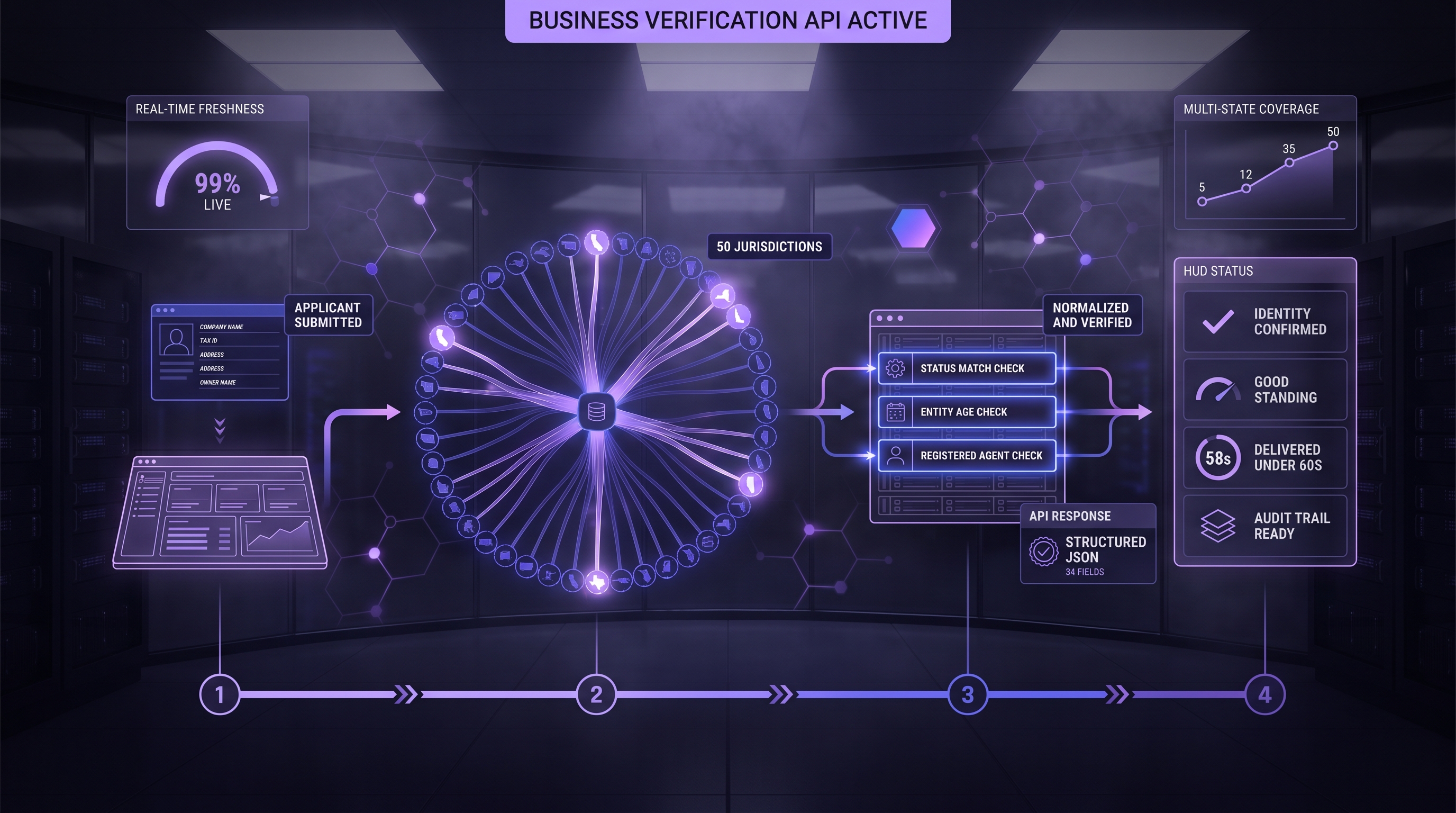
A verification API doesn't decide fraud. It supplies the primary-source facts fraud logic runs on: the fields that surface ghost entities, stacking, and DBA masking.
How to build litigation risk scoring with court data: inputs, honest coverage labels, scoring bands, and reviewer ownership.
Access Real-Time Secretary of State Data and Automate your underwriting process. We help Alternative Funders work smarter through AI Technology. Get our FREE AI Tools here
Subscribe to our Newsletter!