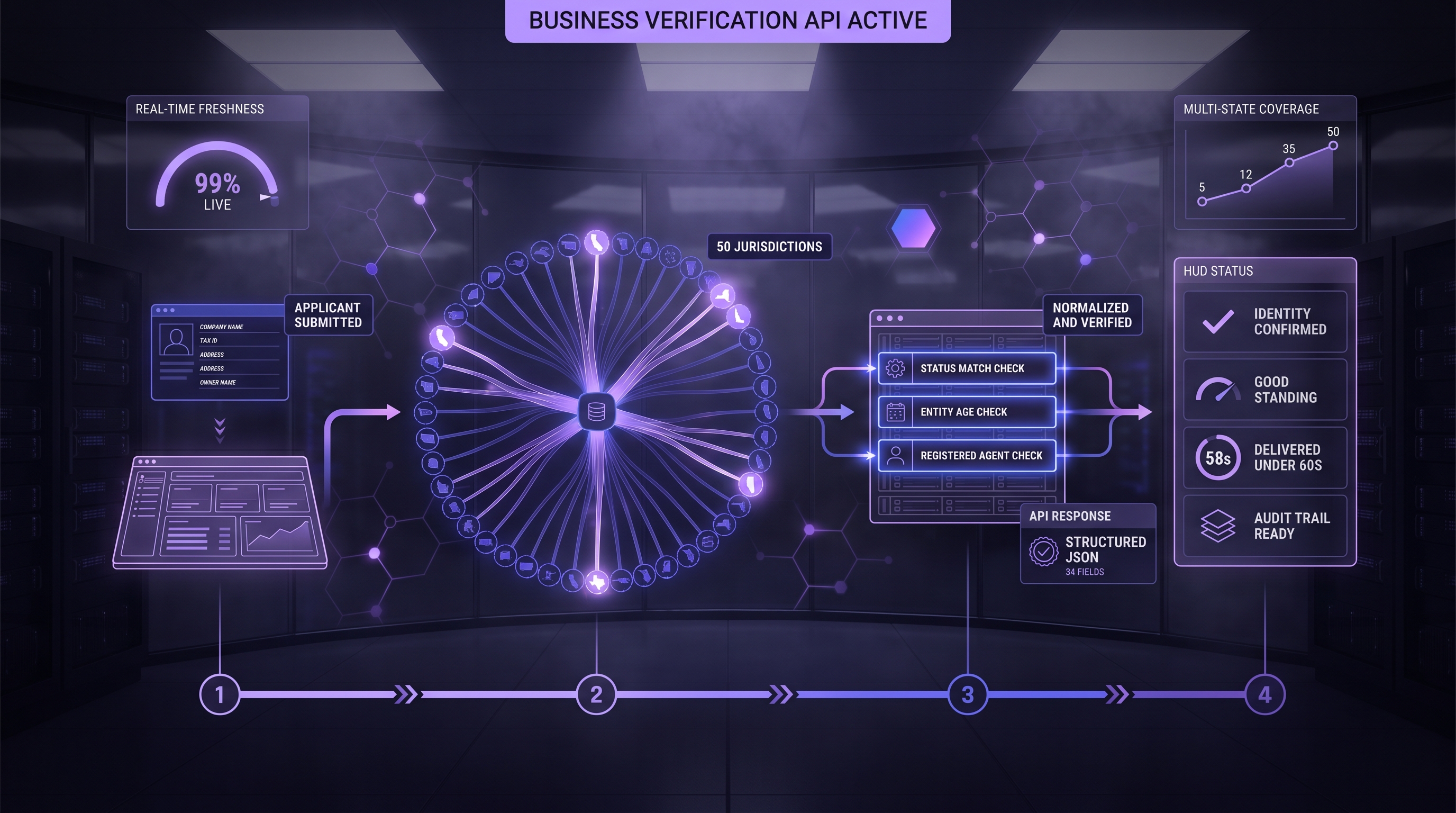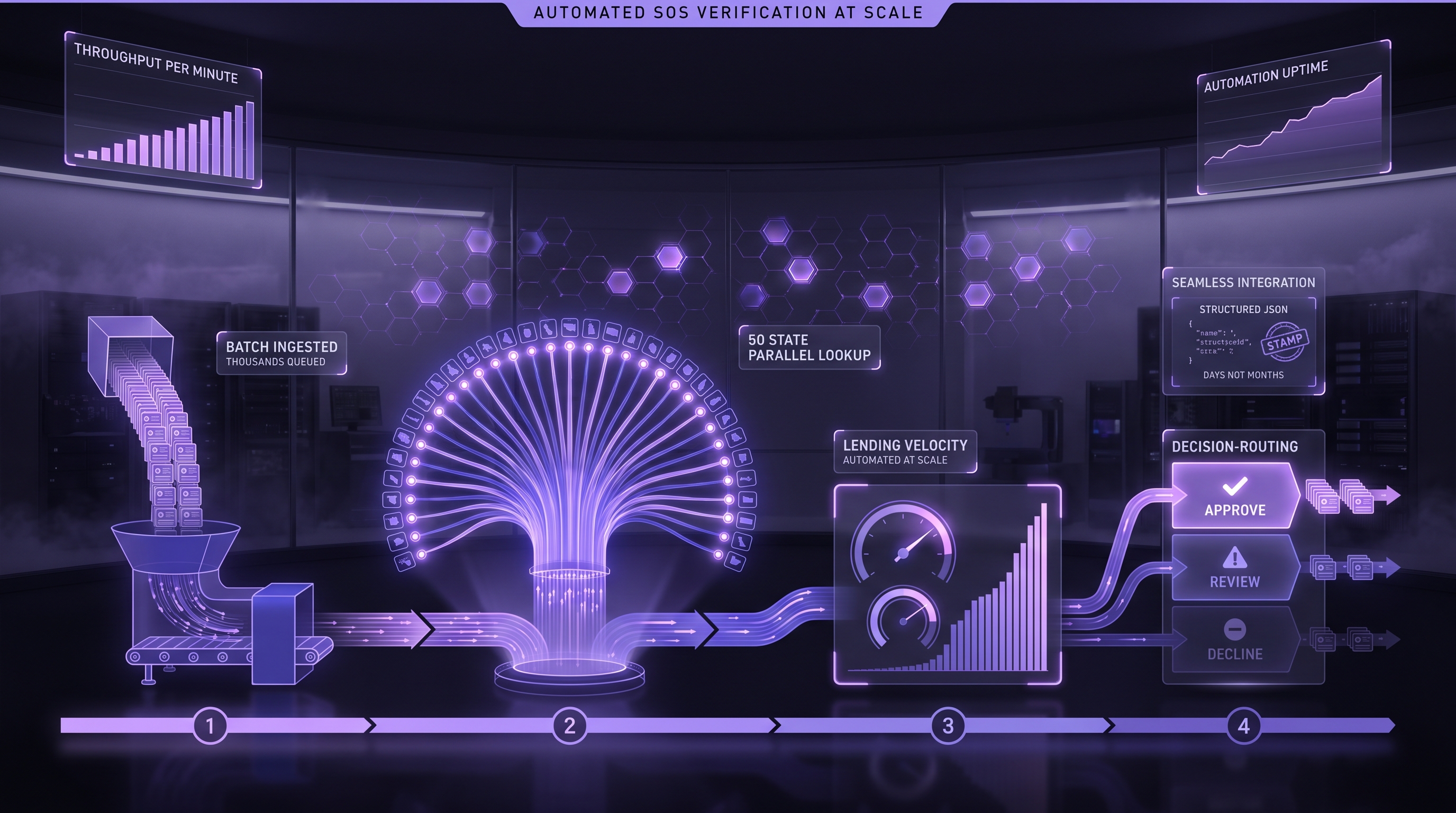



A 2026 guide to evaluating verification APIs for lending compliance and audit-trail defensibility, with focus on primary-source data, retention, and the questions FinCEN and state examiners ask.
A technical evaluation of the Cobalt CLI for MCA underwriting engineering teams: what each command surfaces, how to wire it into application flows, and where it sits in the KYB stack.
Oregon SOS is timing out. You have 47 applicants in your funnel. What happens next is an architectural decision you made months ago. Here is what a resilient pipeline does, what a naive one costs you in deal flow and audit exposure, and the checklist your vendor should be able to answer.
Real-time SOS lookups can take 30 seconds to 5 minutes. Synchronous integration blocks onboarding UX. Async webhook architecture is the production pattern. Here is how it works, what breaks, and how to design for the slow-state tail.
Pure cache verification is cheap but stale. Pure live-ping is current but slow and expensive. A production waterfall routes each application to the right path based on deal risk, entity lifecycle, and state mix. This post is the architecture playbook.
Delaware does not push business name changes into standard data feeds. Oregon runs a slow registry. New Jersey restricts some status data by statute. State-level quirks compound inside static-feed architectures and create verification blind spots invisible to vendor APIs. Here is the state-by-state map.
Newly-formed businesses and sole proprietors are the hardest segment to verify at onboarding. Static feeds miss them, fraud rings target them, and state lender-licensing policy requires fast decisioning anyway. Here is the verification playbook.
Binary match-or-no-match decisioning routes too many ambiguous cases to manual review and misses signal in the borderline band. Confidence-scored decisioning with tiered auto-accept, human review, and decline thresholds is the production pattern. Here is how to design it.
A no-match from a business verification vendor is ambiguous by default: it might mean the entity does not exist, or it might mean the vendor's feed has not caught up. This post covers what a true negative actually is, what examiners want to see, and how to build a decline policy that survives audit.
Access Real-Time Secretary of State Data and Automate your underwriting process. We help Alternative Funders work smarter through AI Technology. Get our FREE AI Tools here
Subscribe to our Newsletter!