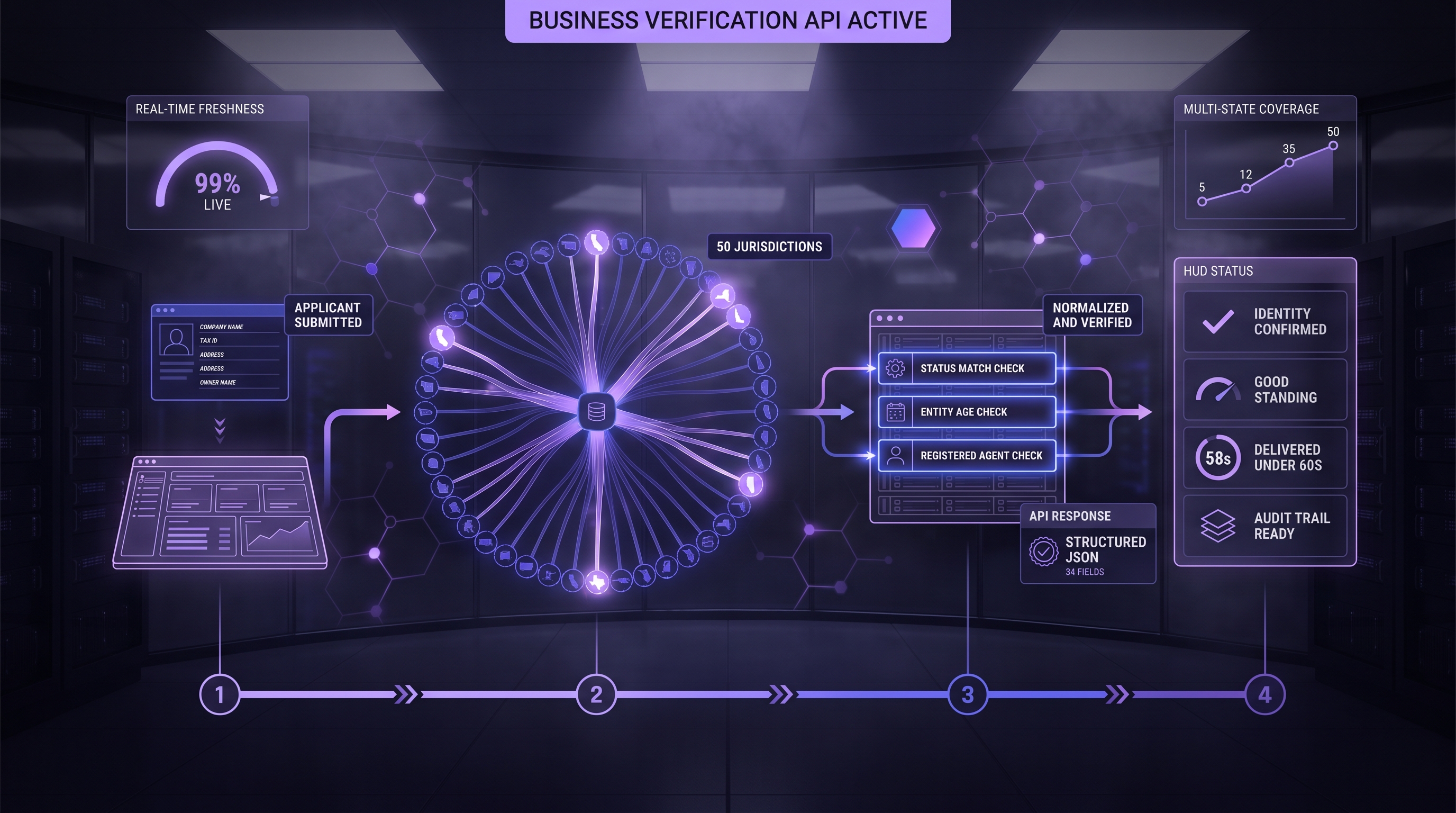








Fifty states, one underlying question: is this entity in good standing where it matters? A normalization workflow for reading statuses across vocabularies.
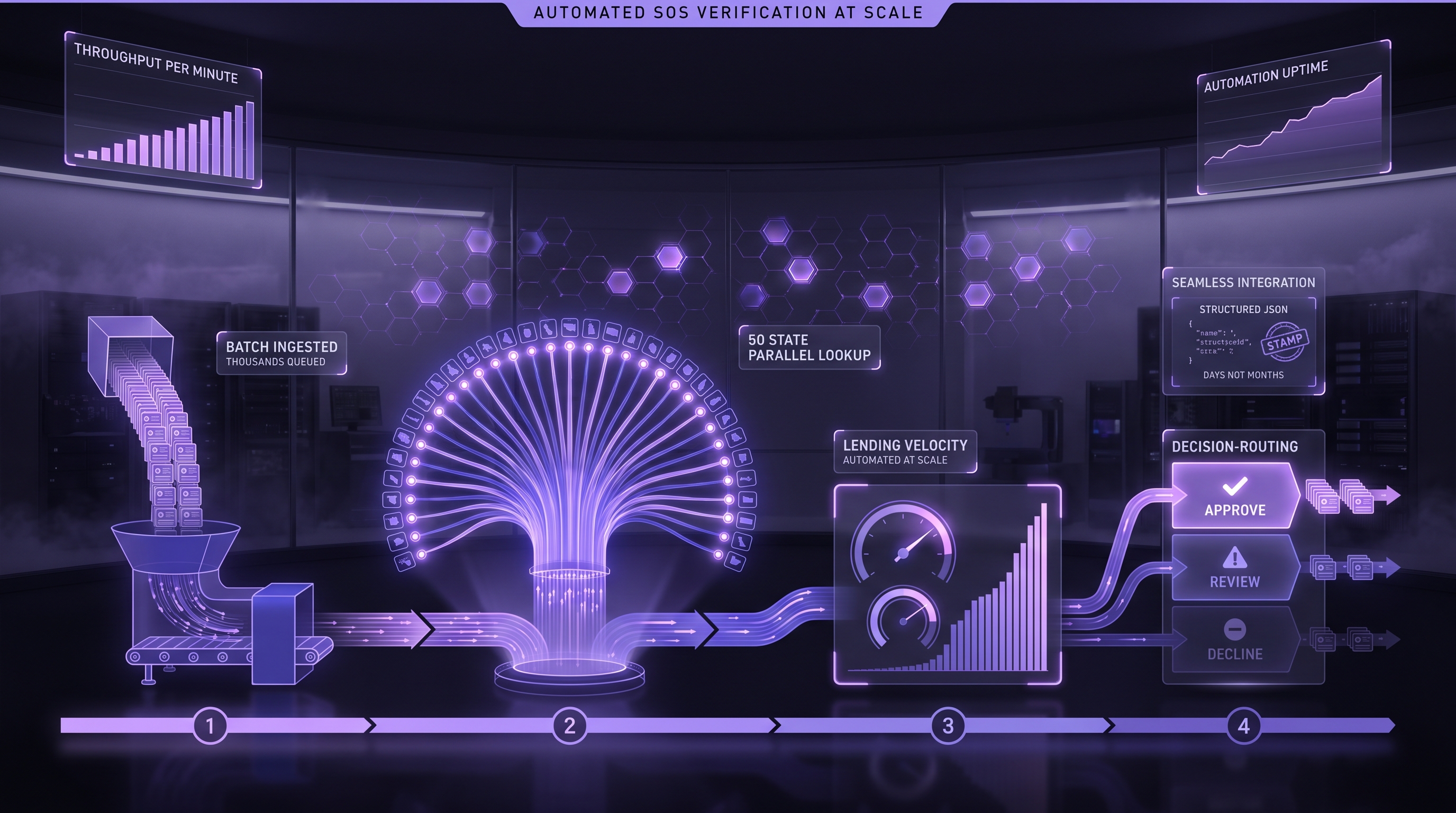
When a full-portfolio registration sweep makes sense, how to batch around per-state latency, budget credits, and turn exceptions into a tiering input.
A borrower operating in three states may be registered in one. Detecting where an entity is registered vs qualified, and what the gap does to lien position.
A vendor's quoted match rate is a marketing number until you test it on your own borrower names. Test-set design, thresholds, and the metrics that matter.
Status, agent, officers, and address decay at different rates. Which staleness class corrupts which decision, and when a cached record is still the right call.
Vendor sandboxes reward happy-path demos. A procurement checklist that tests failure paths: slow states, error shapes, expiry behavior, and support response.
Coverage is a matrix of state, field, latency, and freshness. A weighted scoring rubric for evaluating what an SOS API actually returns where you lend.
Existence, status, standing, registered agent, and officers: what an entity validation API checks, field by field, and what each field means for underwriting.
Lookup and search are different retrieval operations with different failure modes. Which one your workflow needs, and what each does to your match rate.
Access Real-Time Secretary of State Data and Automate your underwriting process. We help Alternative Funders work smarter through AI Technology. Get our FREE AI Tools here
Subscribe to our Newsletter!