






Third Charter Race Filing in 60 Days. Cheapest of 4 Fintech-Bank Buy
Unanimous senior consent gives one group full blocking power
Sentencing set Aug 4, Oct 8; statutory exposure 9 years (54)
Annual certifications, records access added to terms
Oregon SOS is timing out. You have 47 applicants in your funnel. What happens next is an architectural decision you made months ago. Here is what a resilient pipeline does, what a naive one costs you in deal flow and audit exposure, and the checklist your vendor should be able to answer.
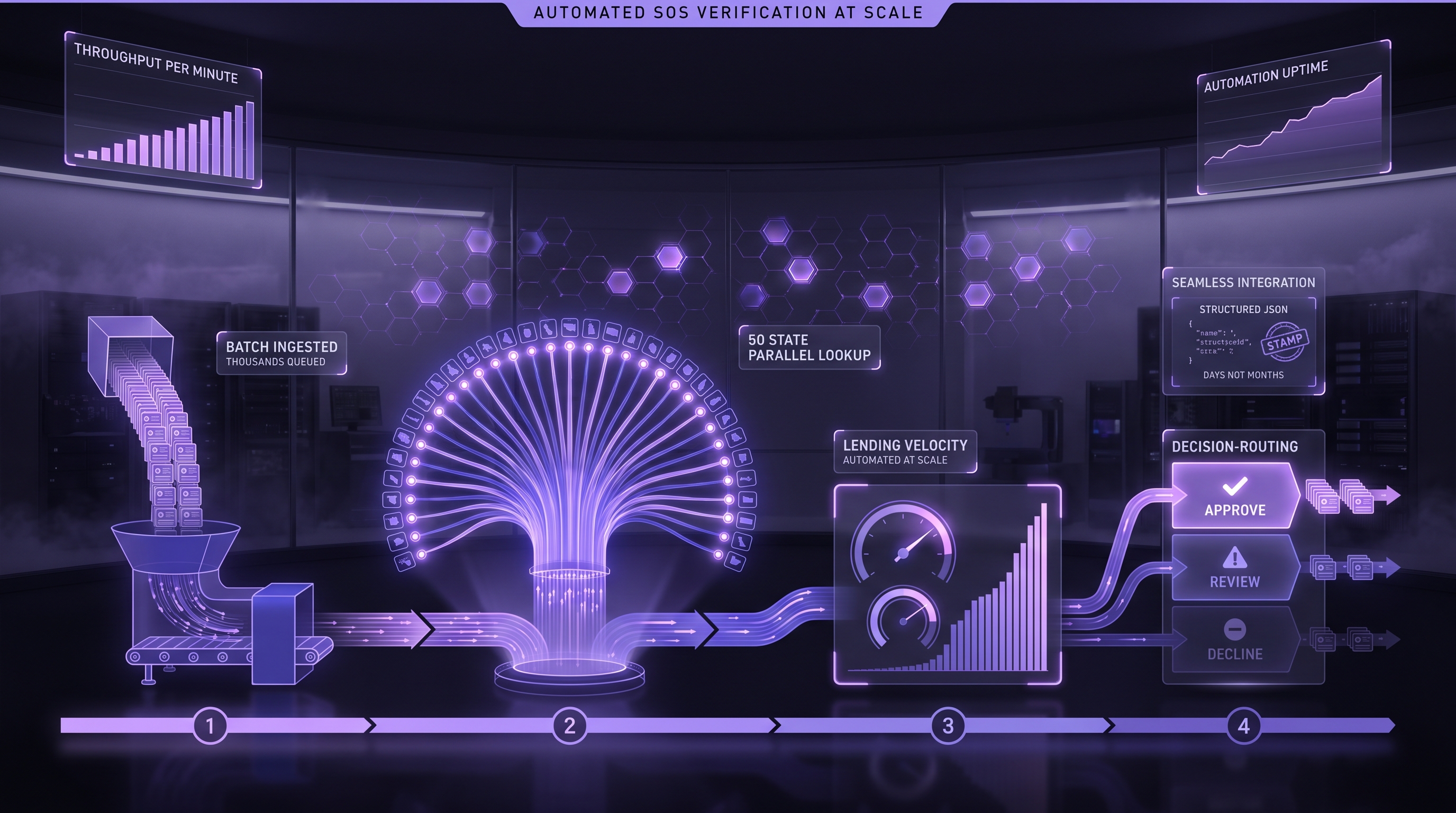
Real-time SOS lookups can take 30 seconds to 5 minutes. Synchronous integration blocks onboarding UX. Async webhook architecture is the production pattern. Here is how it works, what breaks, and how to design for the slow-state tail.
Platforms that embed KYB verification as a feature for downstream customers inherit every verification failure at N times the scale. Here is how the architecture has to change when you go from single-tenant underwriting to multi-tenant verification infrastructure.
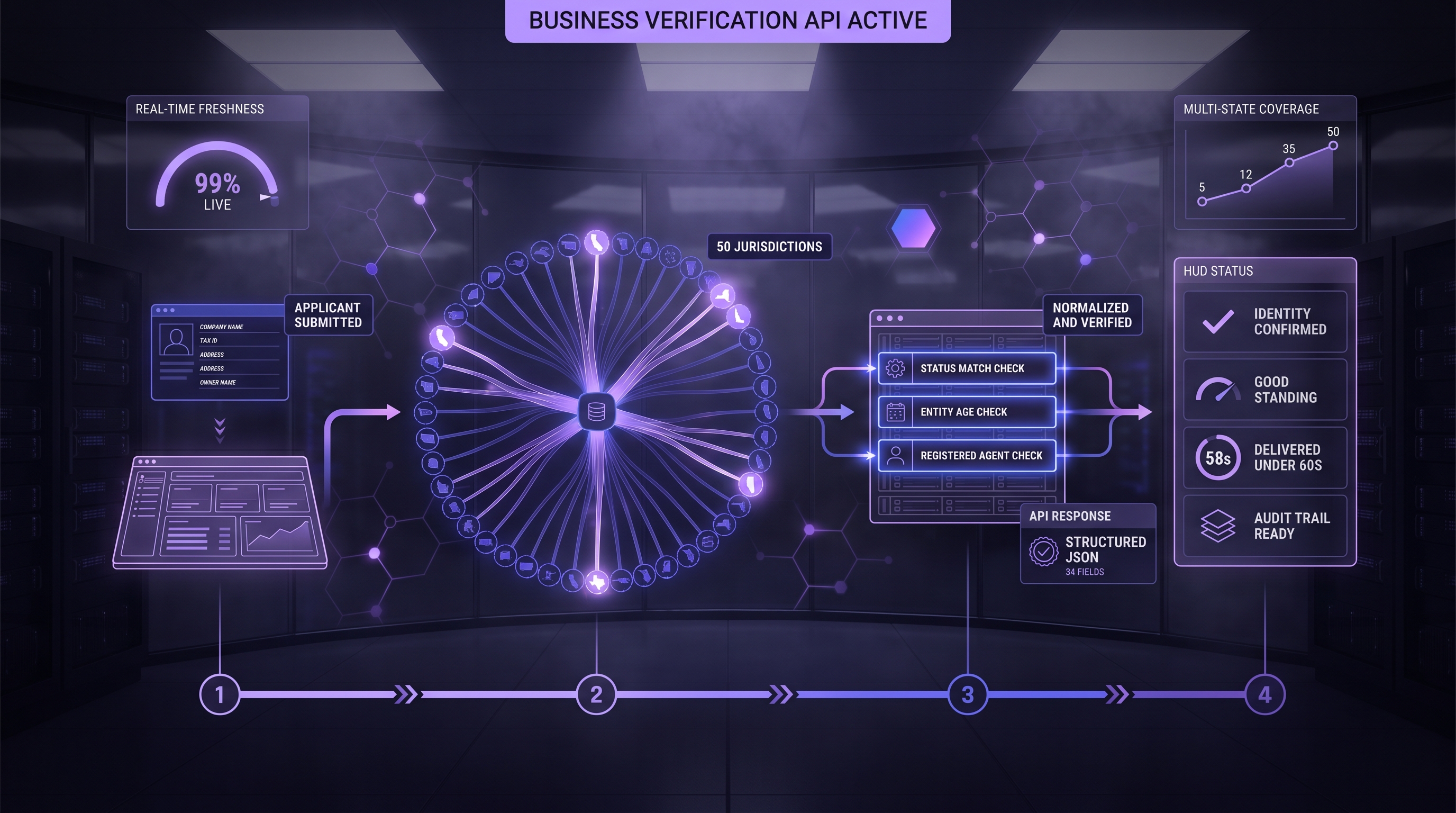
Every state's Secretary of State registry uses its own status vocabulary. 'Active' in one state is 'Good Standing' in another and 'Current' in a third. Your verification layer either normalizes cleanly or accumulates silent underwriting drift. Here is the data-model playbook.
Delaware does not push business name changes into standard data feeds. Oregon runs a slow registry. New Jersey restricts some status data by statute. State-level quirks compound inside static-feed architectures and create verification blind spots invisible to vendor APIs. Here is the state-by-state map.
Access Real-Time Secretary of State Data and Automate your underwriting process. We help Alternative Funders work smarter through AI Technology. Get our FREE AI Tools here
Subscribe to our Newsletter!