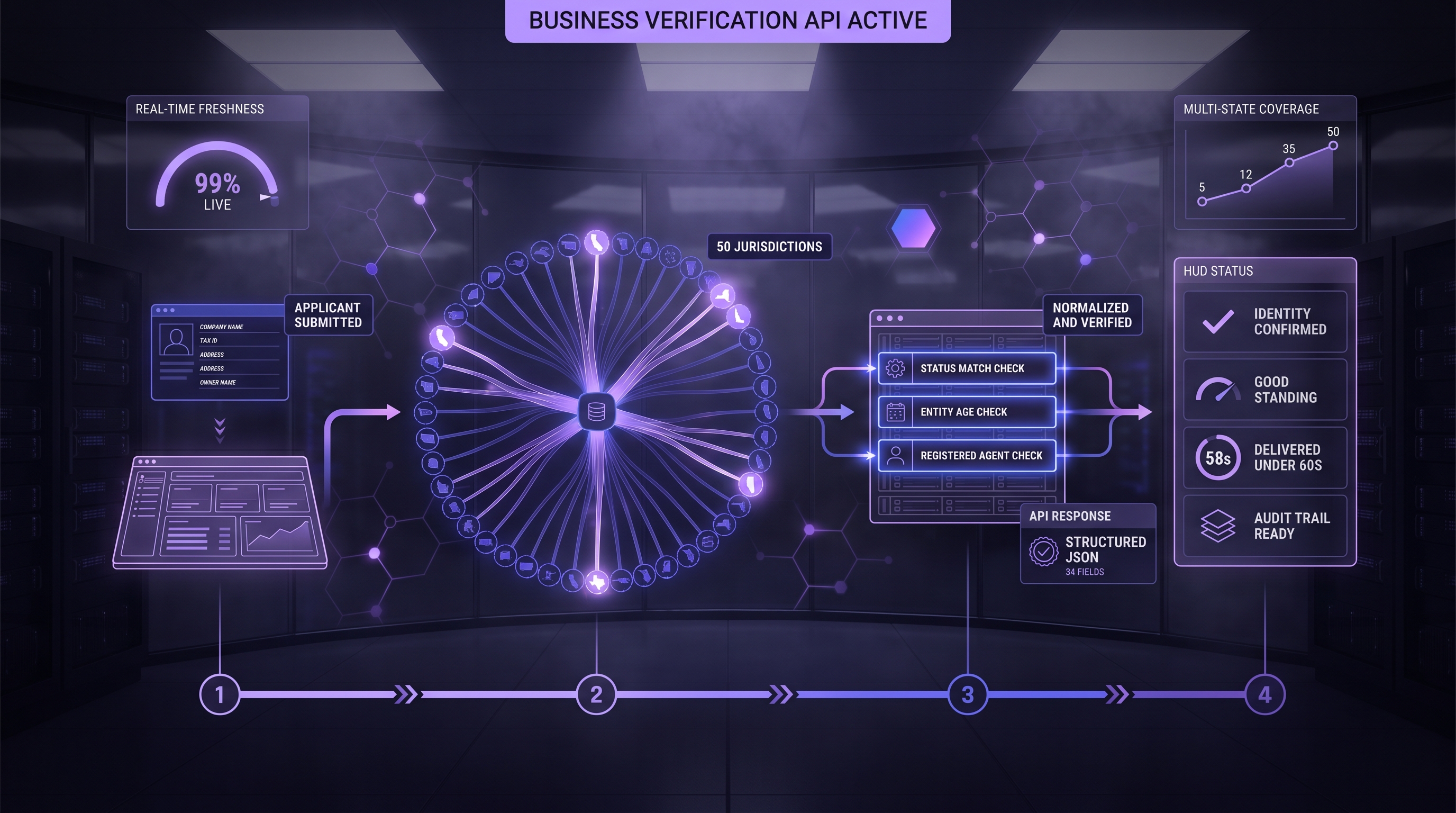








Check order is a cost and fraud-catch decision. Why the SOS record runs first, what routes to each later step, and where every check's evidence lands.
A vendor's quoted match rate is a marketing number until you test it on your own borrower names. Test-set design, thresholds, and the metrics that matter.
Existence, status, standing, registered agent, and officers: what an entity validation API checks, field by field, and what each field means for underwriting.
States record no filing when ownership changes, and US entities no longer report beneficial owners. What officer monitoring can and cannot tell a lender.
Cobalt Business Monitoring re-checks a business's Secretary of State record on your schedule and sends every change to your webhook. One credit per check.
UCC filings and court judgments mean different things together than either does alone. A reading guide for the combinations, including the new filing that lands right after a judgment.
An entity can look clean while its officers carry judgments. How to use SOS officer data as the search key for court record lookups, and what that cross-reference actually catches.
A verification API doesn't decide fraud. It supplies the primary-source facts fraud logic runs on: the fields that surface ghost entities, stacking, and DBA masking.
A practical triple-verification pattern that layers OFAC screening, EIN validation, and SOS entity evidence into one defensible pre-funding route.
Access Real-Time Secretary of State Data and Automate your underwriting process. We help Alternative Funders work smarter through AI Technology. Get our FREE AI Tools here
Subscribe to our Newsletter!