







Buying defaulted paper turns on whether the judgment behind it is real, unsatisfied and still enforceable. How to size the verifiable share of a portfolio.
Plant-touching cannabis operators largely cannot use federal bankruptcy, so distress surfaces in state court receiverships instead. Why state records carry extra weight here.
Trucking carries catastrophic tail risk, so a pending case can matter more than a closed judgment. How court data and FMCSA safety scores answer different questions.
A malpractice suit and a payer dispute are not the same credit signal. How to weight healthcare litigation by case type, and why the borrower entity often is not the defendant.
Bankruptcy, ERISA and securities actions are federal only. What the two court systems each cover, and why a state-court search is not a substitute for a federal one.
Construction lending needs license, lien and litigation checks. Coverage for the three differs by state, and New York is where all three overlap from a single provider.
An entity can look clean while its officers carry judgments. How to use SOS officer data as the search key for court record lookups, and what that cross-reference actually catches.
A default judgment means nobody showed up to contest it. Why that reads differently from a litigated judgment, and how to tell defaults, stipulations and vacated judgments apart.
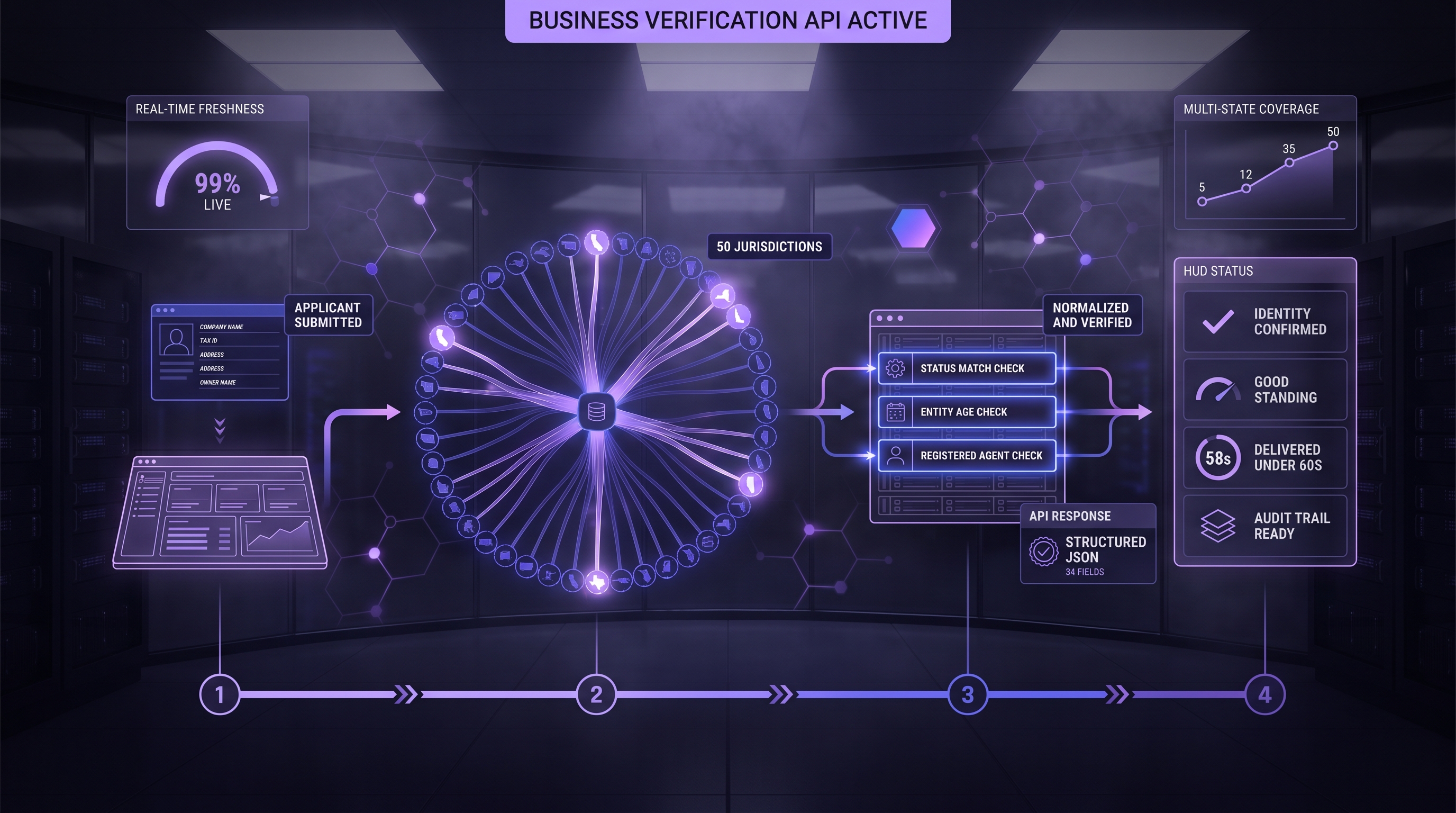
A verification API doesn't decide fraud. It supplies the primary-source facts fraud logic runs on: the fields that surface ghost entities, stacking, and DBA masking.
Access Real-Time Secretary of State Data and Automate your underwriting process. We help Alternative Funders work smarter through AI Technology. Get our FREE AI Tools here
Subscribe to our Newsletter!