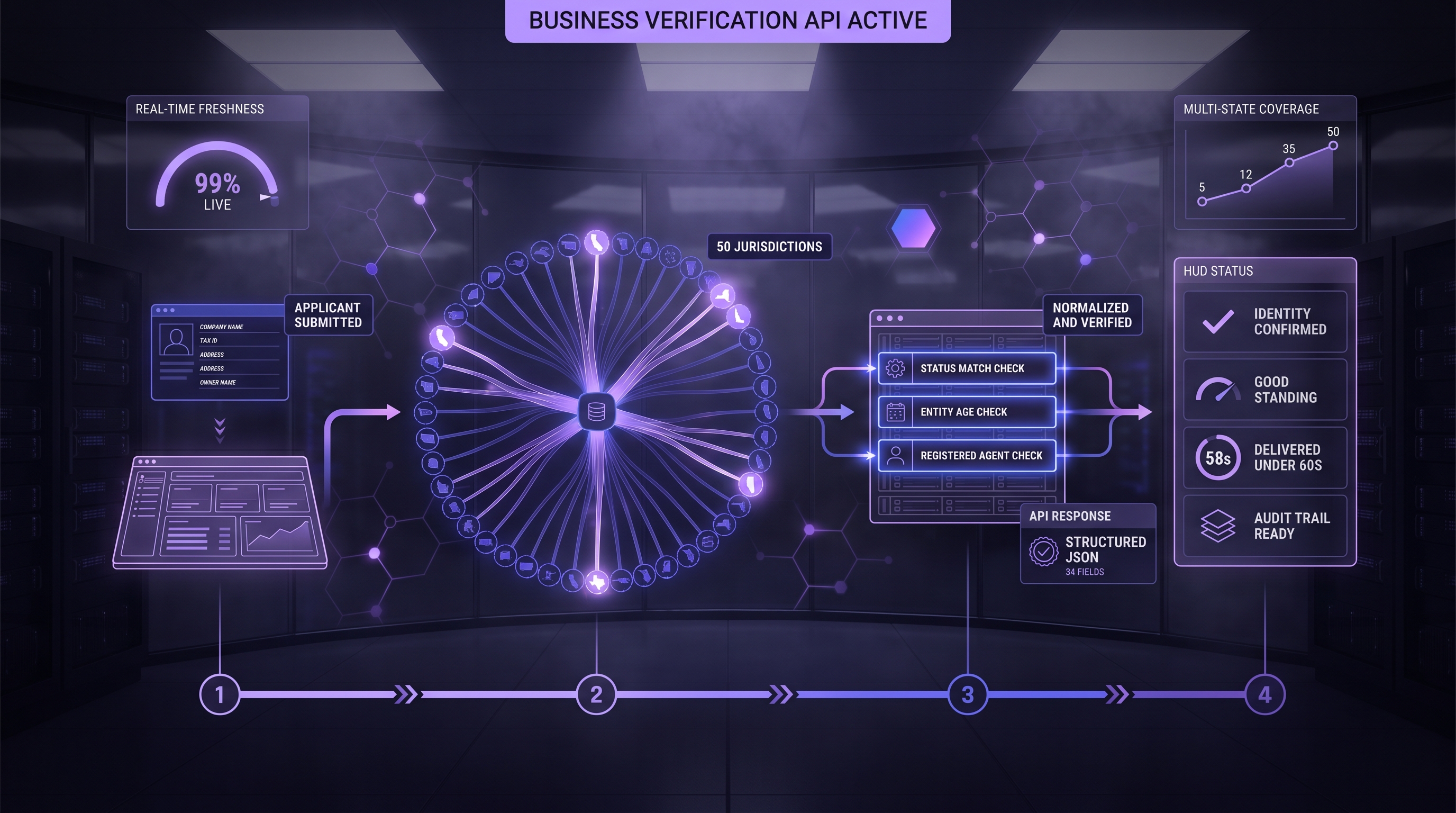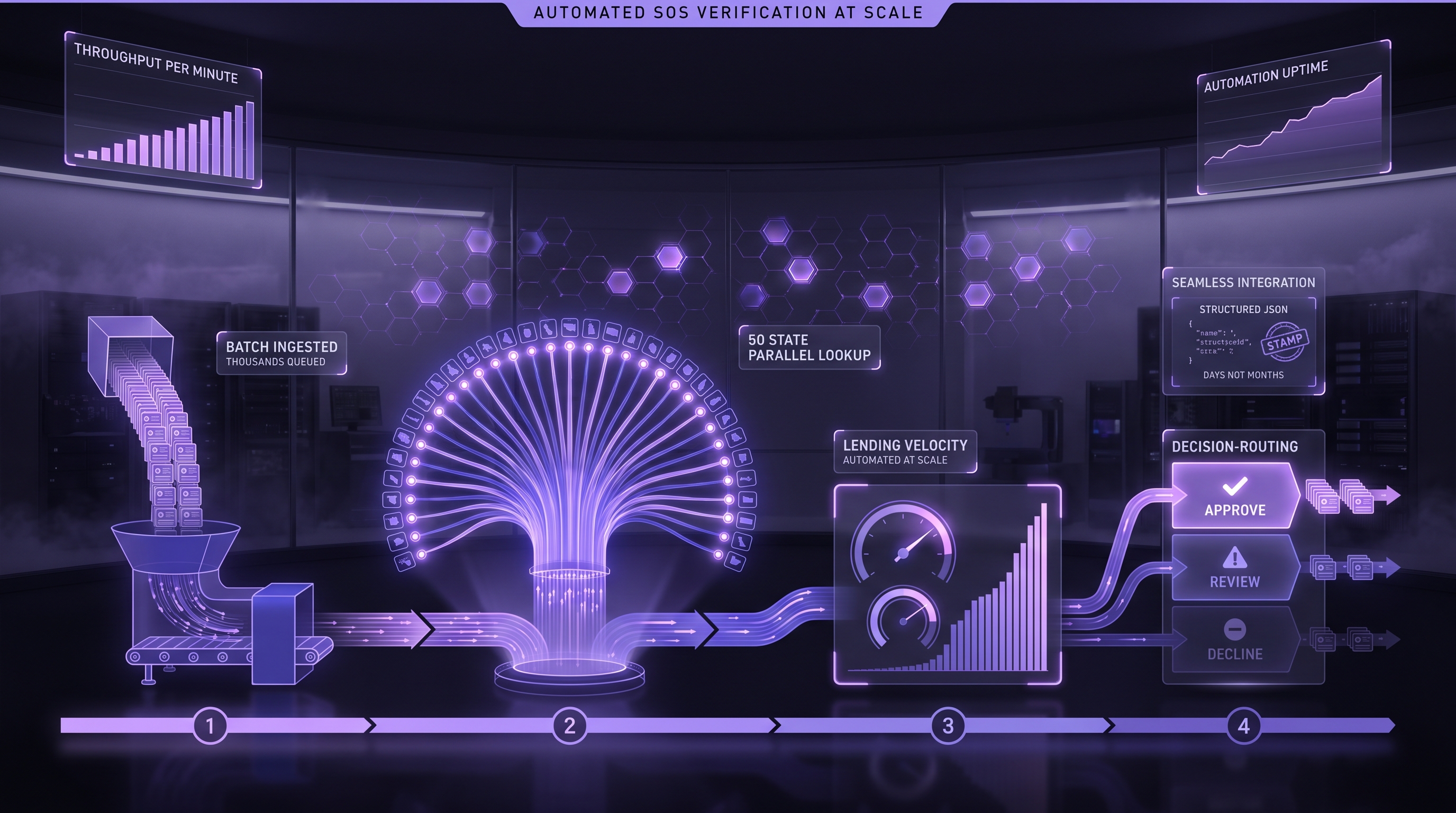








Pure cache verification is cheap but stale. Pure live-ping is current but slow and expensive. A production waterfall routes each application to the right path based on deal risk, entity lifecycle, and state mix. This post is the architecture playbook.
Delaware does not push business name changes into standard data feeds. Oregon runs a slow registry. New Jersey restricts some status data by statute. State-level quirks compound inside static-feed architectures and create verification blind spots invisible to vendor APIs. Here is the state-by-state map.
Newly-formed businesses and sole proprietors are the hardest segment to verify at onboarding. Static feeds miss them, fraud rings target them, and state lender-licensing policy requires fast decisioning anyway. Here is the verification playbook.
Binary match-or-no-match decisioning routes too many ambiguous cases to manual review and misses signal in the borderline band. Confidence-scored decisioning with tiered auto-accept, human review, and decline thresholds is the production pattern. Here is how to design it.
A no-match from a business verification vendor is ambiguous by default: it might mean the entity does not exist, or it might mean the vendor's feed has not caught up. This post covers what a true negative actually is, what examiners want to see, and how to build a decline policy that survives audit.
Static Secretary of State data feeds lag real-world registry changes by days or weeks, creating false no-matches that route legitimate deals into manual review or decline. This is what that costs alternative lenders at volume and what real-time lookup actually changes.
SOFR+350-450 warehouse paper faces Q4 2026 repricing test
Reg B Final Rule Hits 482,000 Nondepositories
$20M Bitwise Participations Altered, Signature Forged, DOJ Says
Access Real-Time Secretary of State Data and Automate your underwriting process. We help Alternative Funders work smarter through AI Technology. Get our FREE AI Tools here
Subscribe to our Newsletter!