


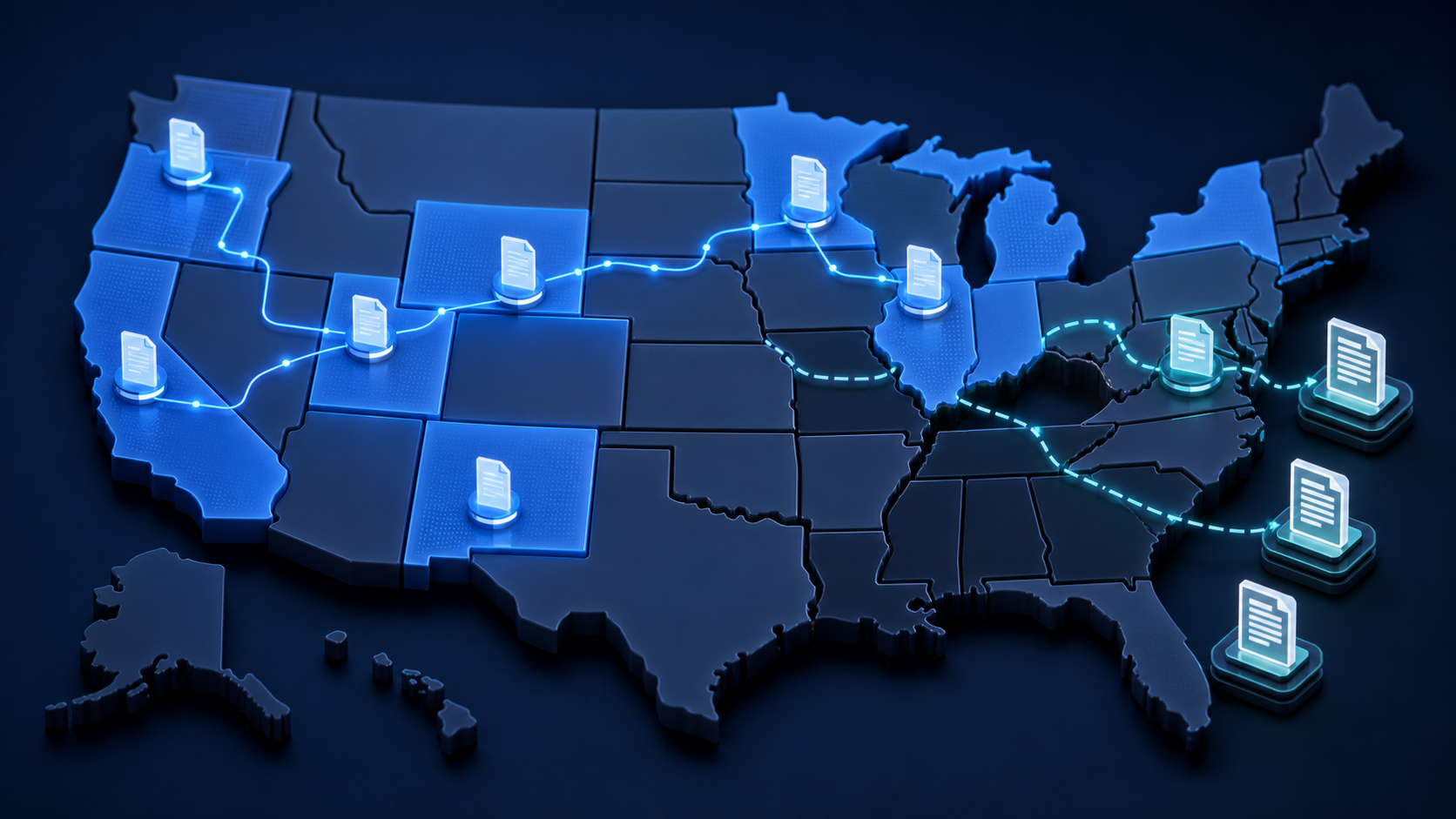
Executive Summary: A partial UCC API becomes decision-safe when coverage determines the route, not the conclusion. If a search returns no filing, the system must first prove that the relevant jurisdiction, debtor identity, filing types, and source were covered. Otherwise, `no result` may only mean `not searched here`. A useful UCC roadmap therefore has two products: a coverage matrix for automation and a documented fallback for every unsupported or inconclusive path.
Why Is Coverage Part of the Result?
UCC records are maintained through state filing offices under jurisdiction-specific systems. Search logic, identifiers, indexing, fees, access, document images, and availability can vary. A lender cannot safely interpret a response without knowing what the search could see.
What does a filing record represent?
A UCC record may include an initial financing statement and later amendments, assignments, continuations, terminations, or information statements. The filing and collateral text require review in context. A search result is evidence for lien analysis, not a legal opinion on perfection or priority.
California publishes UCC search rules requiring a debtor name and a choice between individual and organization searches.[1] Texas maintains its own UCC filing and search guidance.[2] Those systems should not be treated as one uniform national database.
Coverage is an input to interpretation. It cannot be added after the decision.
What Should the Coverage Matrix Contain?
For every jurisdiction, record:
1. Support status.
2. Authoritative source.
3. Required debtor search keys.
4. Organization and individual-name rules.
5. Filing types returned.
6. Date or history limitations.
7. Document-image availability.
8. Known tax or federal lien exclusions.
9. Source availability and freshness behavior.
10. Approved fallback and owner.
Cobalt's current UCC integration adds UCC data to supported SOS searches with `uccData=true` and currently documents an 11-state footprint. It depends on state filing databases and does not represent every tax or federal lien source.[3]
How Should Debtor Identity Be Resolved?
Search the correct legal debtor name under the filing office's rules. Preserve every submitted variant and result. A DBA, punctuation change, old name, or wrong legal entity can alter retrieval.
What evidence should precede the search?
• Legal name and prior legal names.
• Entity type.
• Formation jurisdiction.
• State entity identifier.
• Principal address where relevant.
• Financing recipient and collateral owner.
• Individual debtor name when policy requires it.
California's published UCC rules make the submitted debtor name and subject type part of the search request.[1] The safe system does not silently normalize a name and discard the original.
What Does a No-Result Route Require?
Before interpreting no returned filing, answer these questions:
• Was the correct jurisdiction supported?
• Was the authoritative source available?
• Was the exact legal debtor searched?
• Were required variants searched?
• Did the product include the relevant filing types and history?
• Does policy require another source for tax or federal liens?
• Was an official certificate or image required?
If any answer is unresolved, route to fallback. Do not assign `no lien`.
What Should the Fallback Look Like?
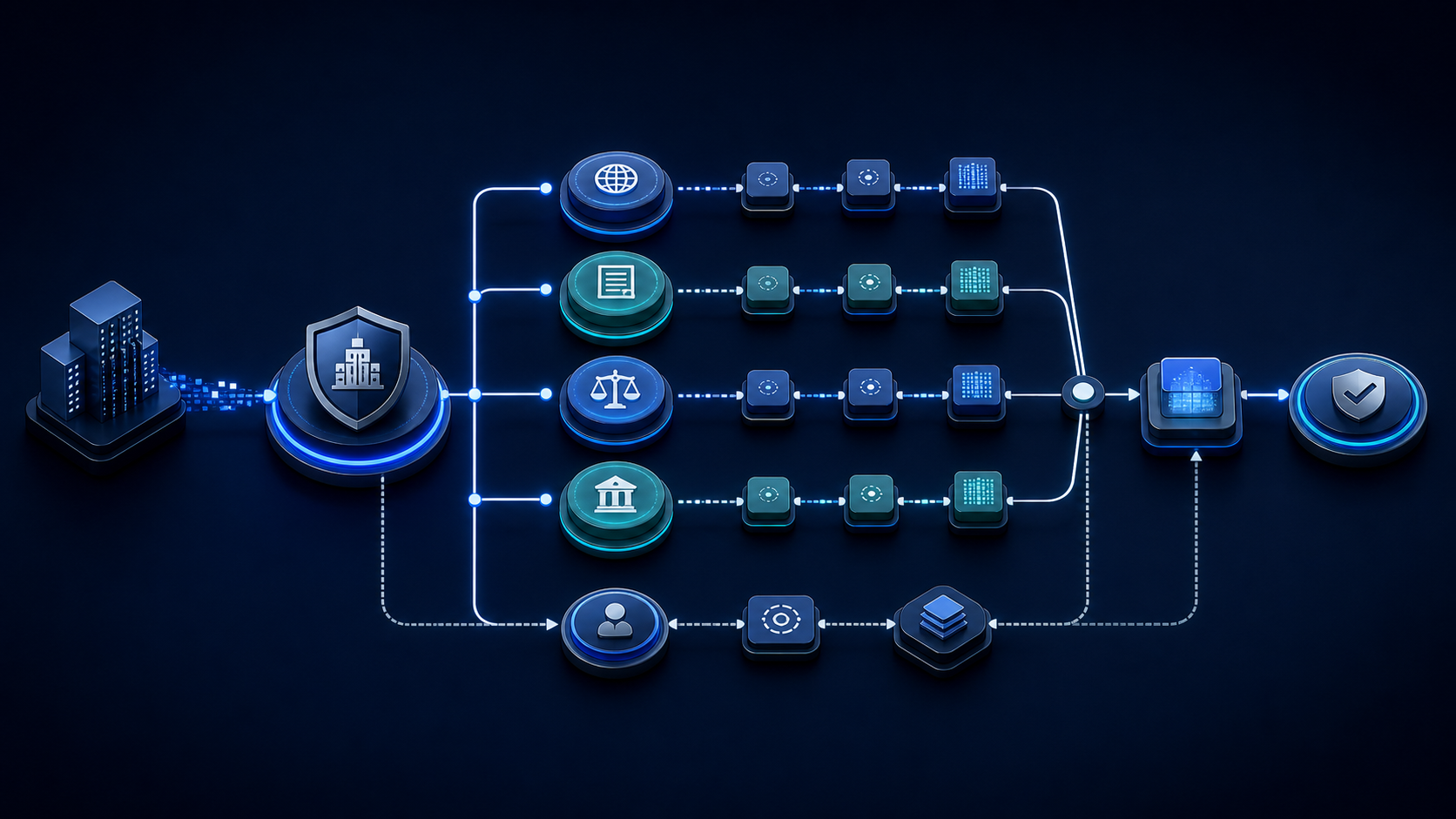
A fallback is not an analyst searching the web without instructions. It names the source, query, evidence artifact, reviewer, and completion rule.
unsupported jurisdiction
  -> authoritative filing-office search
  -> exact debtor inputs preserved
  -> result or certificate retained
  -> reviewer conclusion
  -> lender policy route
Florida publishes official UCC filing information and access to its registry.[4] Each state row should point to the current authoritative route and be retested on a schedule.
How Should Returned Filings Be Reviewed?
Preserve the filing number, filing office, debtor, secured party, filing date, status or lifecycle events, and collateral text where available. Link amendments, assignments, continuations, and terminations to the initial record.
Do not infer legal priority from a simple date sort. Do not assume a termination resolves every legal question. Do not treat broad filer-supplied collateral text as a standardized asset classification.
The lender should define which cases require counsel, an official image, a certified search, or additional lien sources.
How Should the Roadmap Expand?
Expansion should follow observed demand and verified source readiness, not an unapproved vendor promise.
Score each candidate jurisdiction using the organization's own inputs:
• Application or portfolio volume.
• Fallback workload.
• Source accessibility and stability.
• Query-rule complexity.
• Evidence completeness.
• Incident frequency.
• Legal or policy priority.
Run shadow searches before allowing a new route to influence decisions. Compare the automated results with the approved fallback, document discrepancies, and approve the coverage change through a versioned release.
What Should the Audit Record Preserve?
• Coverage-matrix version.
• Search jurisdiction and support state.
• Exact debtor inputs and variants.
• Raw response or source artifact.
• Availability and retrieval timestamp.
• Filing images or certificates when required.
• Reviewer interpretation.
• Policy route and authorized outcome.
The record should distinguish `supported with no returned filing`, `unsupported`, `source unavailable`, `identity unresolved`, and `filing found`. Those states have different operational meanings.
What Should Teams Monitor?
1. Volume by jurisdiction.
2. Unsupported-state fallback rate.
3. No-result cases later producing filings through fallback.
4. Name-variant search rate.
5. Source-unavailable aging.
6. Filings missing images or lifecycle context.
7. Manual reviewer disagreement.
8. Coverage changes and rollback events.
These measures help prioritize roadmap work. They do not prove lien priority or credit outcome.
What Is the Practical UCC Workflow?
Resolve the debtor identity, check coverage, run the supported search, preserve the exact response, review filing lifecycle and collateral context, and invoke an authoritative fallback whenever coverage or evidence is incomplete.
Cobalt can return UCC data for documented supported states through its SOS workflow. The lender owns jurisdiction selection, fallbacks, legal interpretation, policy, and decisioning.
Ready to test your matrix with one supported state, one unsupported state, and one name-variant case? Schedule a Cobalt Intelligence demo and bring your current fallback and evidence requirements.




.jpg)


.png)