


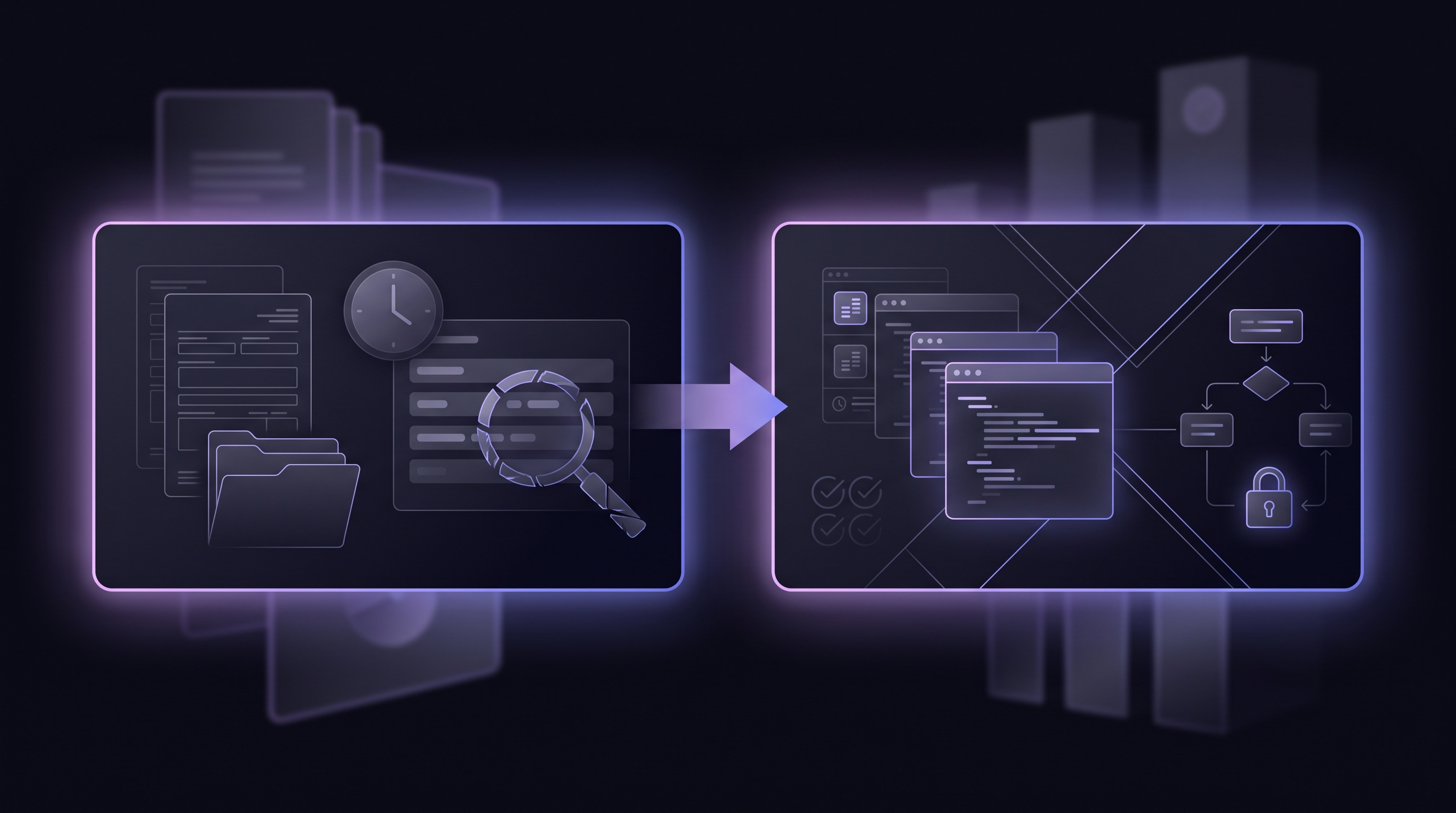
Executive Summary: Real-Time UCC API vs Manual Lien Search: Time + Accuracy Comparison helps operations, risk, and engineering buyers answer a question that does not appear on the balance sheet: who already has a secured claim on this business? A UCC financing statement identifies a debtor, a secured party, and the collateral covered by a security interest.[1] For lenders, that public filing can change the risk of a deal before the credit model ever sees repayment data. The practical risk is choosing between state portal searches, enterprise lien platforms, and API-delivered lien data. If another creditor filed first, a new lender may be subordinate on the same collateral. UCC priority rules generally make timing matter, and conflicting perfected security interests are often ranked by filing or perfection sequence.[2]
Why real time UCC API manual lien Matters
In UCC workflow comparison, the UCC search is not a legal formality. It is a recovery-risk check. A borrower may look healthy on revenue, bank data, and entity status while still carrying existing liens that limit recoverability.
A financing statement also reveals the breadth of the claim. Some filings are tied to a specific piece of equipment. Others claim accounts receivable, inventory, or all assets. Those details affect whether the lender is comfortable funding, asks for more documentation, changes terms, or declines.
What a UCC Filing Search Should Return
A useful UCC filing search should return more than a PDF link. For underwriting, the data should be structured enough to route:
• Filing number and filing date.
• Debtor name and address.
• Secured party name and address.
• Collateral description.
• Filing type or status where available.
• Any amendment or continuation dates the state exposes.
Cobalt's UCC Filing Data API is delivered through the standard Secretary of State search endpoint with `uccData=true`. That means the same workflow can return entity verification and lien data together.
How to Use the Data in Underwriting
The search result should feed a policy decision, not sit in a document folder. A simple underwriting policy can start with four questions:
1. How many active filings appear against this debtor?
2. How many unique secured parties are present?
3. Are the collateral descriptions narrow or broad?
4. Did the filings appear recently enough to suggest new credit stress?
For workflow design, vendor evaluation, time study, and quality control, those questions decide whether the deal stays automated, moves to manual review, or stops before funding. The public record is useful only if it changes the workflow.
Priority and Encumbrance Logic
UCC filings matter because secured claims can conflict. Section 9-322 gives the general priority framework for conflicting security interests.[2] Section 9-502 describes the basic contents of a financing statement.[3] Section 9-310 describes the general filing requirement for perfection.[4]
Underwriters do not need to become lawyers to use this signal. They do need a consistent rule that says when an existing filing changes the risk grade. For example, a single equipment-specific lien may be acceptable for an unrelated working capital product. Multiple broad all-assets liens from different secured parties deserve a different review path.
API Workflow vs Manual Search
Manual lien searches create three operational problems. First, every state has its own portal and search behavior. Second, staff have to interpret names, filings, dates, and collateral descriptions by hand. Third, the result has to be copied back into the underwriting system.
An API approach reduces those steps. The lender submits the business name and state, requests UCC data, and receives structured results alongside entity status. New York's UCC FAQ illustrates why state-specific process still matters: searches, copies, certified results, and expedited services each have their own mechanics and fees.[5] An API does not remove the law. It removes avoidable workflow friction.
Implementation Checklist
For UCC workflow comparison, build the workflow this way:
1. Run SOS entity verification first to normalize the legal business name.
2. Enable UCC data for lending, credit, and collateral-sensitive decisions.
3. Count active filings and unique secured parties.
4. Flag broad collateral descriptions such as all assets, accounts, inventory, or receivables.
5. Compare filing dates against the application timeline.
6. Store the raw result and the decision reason in the loan file.
7. Route unsupported states to a fallback search process.
Cobalt's current UCC coverage is 11 states, so coverage logic should be explicit. If a state is unsupported, the system should say so and route the case. Silent gaps are worse than manual work.
What the Data Does Not Prove
A UCC filing does not prove current debt balance. It does not show whether a loan has been paid off unless the public record includes termination information. It does not include tax liens or every federal claim. It also depends on state filing lag and the quality of the collateral text submitted by the filer.
That means UCC data should be treated as an underwriting signal, not a final legal opinion. The output should tell the team what to review next.
Bottom Line
Real-Time UCC API vs Manual Lien Search: Time + Accuracy Comparison gives lenders a faster way to identify existing secured-party claims before they fund. When the data is returned through an API, underwriters can move from portal searching to policy routing: clean files continue, risky files pause, and unsupported states are handled deliberately.





.jpg)


.png)