


Executive Summary: deBanked CONNECT Miami 2026 drew over 1,000 registrations to the Fontainebleau Miami Beach, more than doubling the 461 attendees at the 2019 event. With 60+ sponsors, 27 sessions, and 8 tech demo companies across two concurrent tracks, this was the largest deBanked gathering to date. This blog covers the key themes from the event: broker automation gaining momentum, Bitty Advance's continued dominance as Title Sponsor alongside OppFi's equity stake, Idea Financial's ISO-driven growth with a differentiated product, and what this level of industry investment signals for funders and brokers heading into the second half of 2026.
Introduction
On February 12, 2026, over 1,000 attendees gathered at the Fontainebleau Miami Beach for deBanked CONNECT Miami, the largest event in the deBanked conference series to date.[1] That figure represents more than double the 461 attendees who showed up at the 2019 event, and the growth was visible in every dimension: 60+ sponsor companies, 27 sessions running across two concurrent tracks for the first time, and 8 technology companies running live product demonstrations, each presenting twice to accommodate demand.
The scale of this event tells a story on its own. When this many companies are investing this much in booth space, sponsorships, speaking slots, and brand visibility at a single industry gathering, it signals something beyond networking. It signals an industry that has matured past the point of informality and is now operating with the structure, competition, and capital allocation of an established financial services sector.
Cobalt Intelligence's Customer Success Manager Patricia was on the ground at CONNECT 2026. The observations in this blog draw from her firsthand account, combined with verified reporting from deBanked and public sources.
Broker Automation Is Accelerating, and Funders Need a Strategy for It
The most immediate signal from deBanked CONNECT Miami 2026 was the level of investment flowing into broker automation infrastructure. Eight companies ran live technology demonstrations across two rounds of sessions, each presenting twice.[1] Two of those demos stood out for different but related reasons: Heron Data, which presented their Broker Suite for end-to-end broker workflow automation, and Ocrolus, which presented their Encore platform for standardized cash flow data sharing.
Heron Data's Broker Suite: Full Workflow Automation
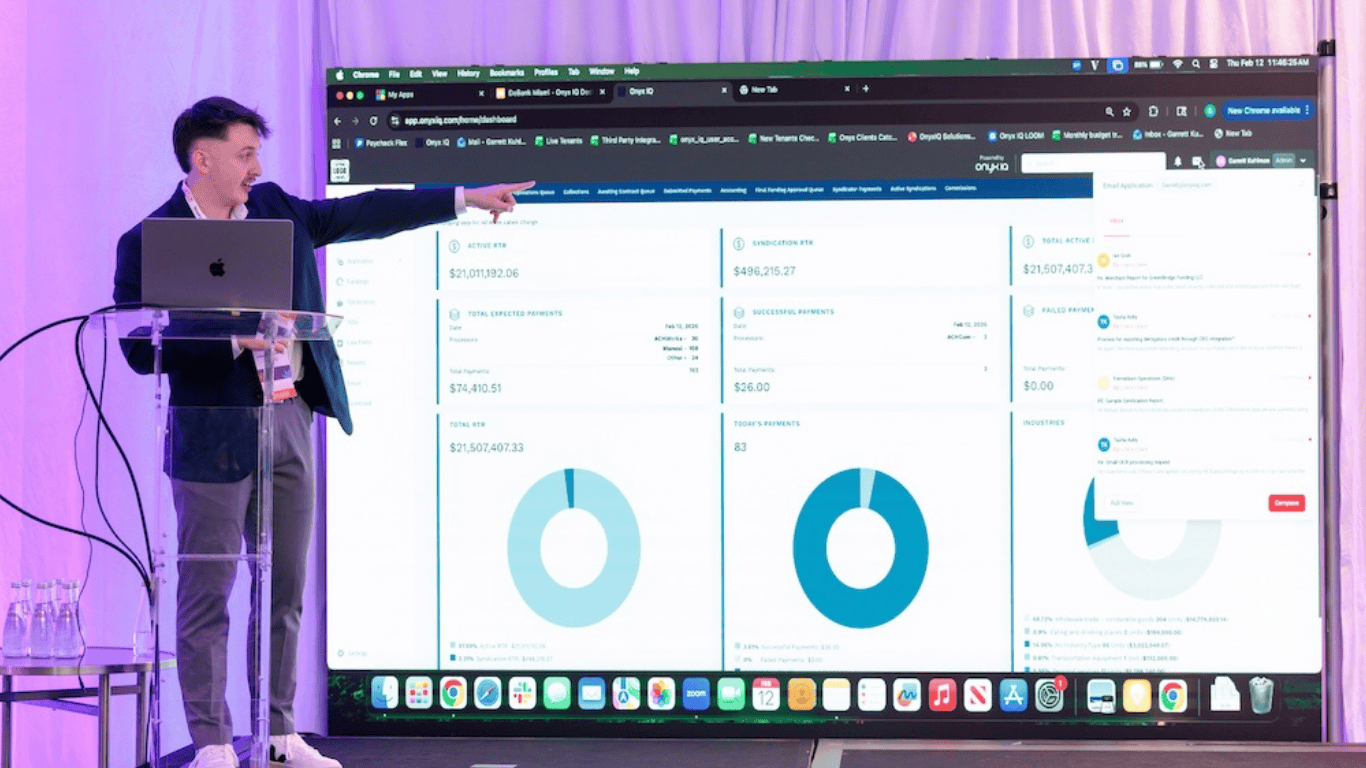
Heron Data presented their Broker Suite in two tech demo sessions, with Co-Founder and CRO Jamie Parker walking attendees through the full workflow live on stage.[2]
The system covers the entire broker operation from intake to close. It ingests broker submissions, parses bank statements, identifies revenue and existing MCA positions, then matches deals to the most likely funders based on approval criteria and historical patterns. From there, submissions are handled automatically across funder portals, email, and API integrations. When funders respond with decisions, those are captured and synced back into the broker's CRM, whether that is Salesforce, CloudSquare, Centrex, LendSaaS, or another platform.[2]
That last point, the automated funder matching, is the one that should matter most to funders reading this.
When brokers adopt automated deal routing, submissions get allocated based on algorithmic fit: approval criteria, response times, offer competitiveness, and historical approval rates. Funders who are slow to respond, inconsistent in their approvals, or unclear in their underwriting criteria risk losing deal flow without ever knowing it. The broker is not making a phone call to explain why they stopped sending deals. The algorithm is simply routing elsewhere.
This is not a theoretical product. Early adopters are already in production. Big Think Capital, which according to Heron Data processes over 5,000 daily decision emails, reported processing cost reductions of up to 80% and offer-to-rep response times under 60 seconds. TFS Financial has automated more than 4,000 monthly lending decisions through the platform.[2]
Heron raised $16.5M in Series A funding in 2025, led by Insight Partners with participation from Y Combinator. The company processes over 500,000 files per week for 150+ customers, including FDIC-insured banks.[2] This is not a startup experimenting with a proof of concept. It is a funded company expanding into a specific market gap with paying customers and measurable results.
Ocrolus Encore: Data Standardization Across the Funding Chain
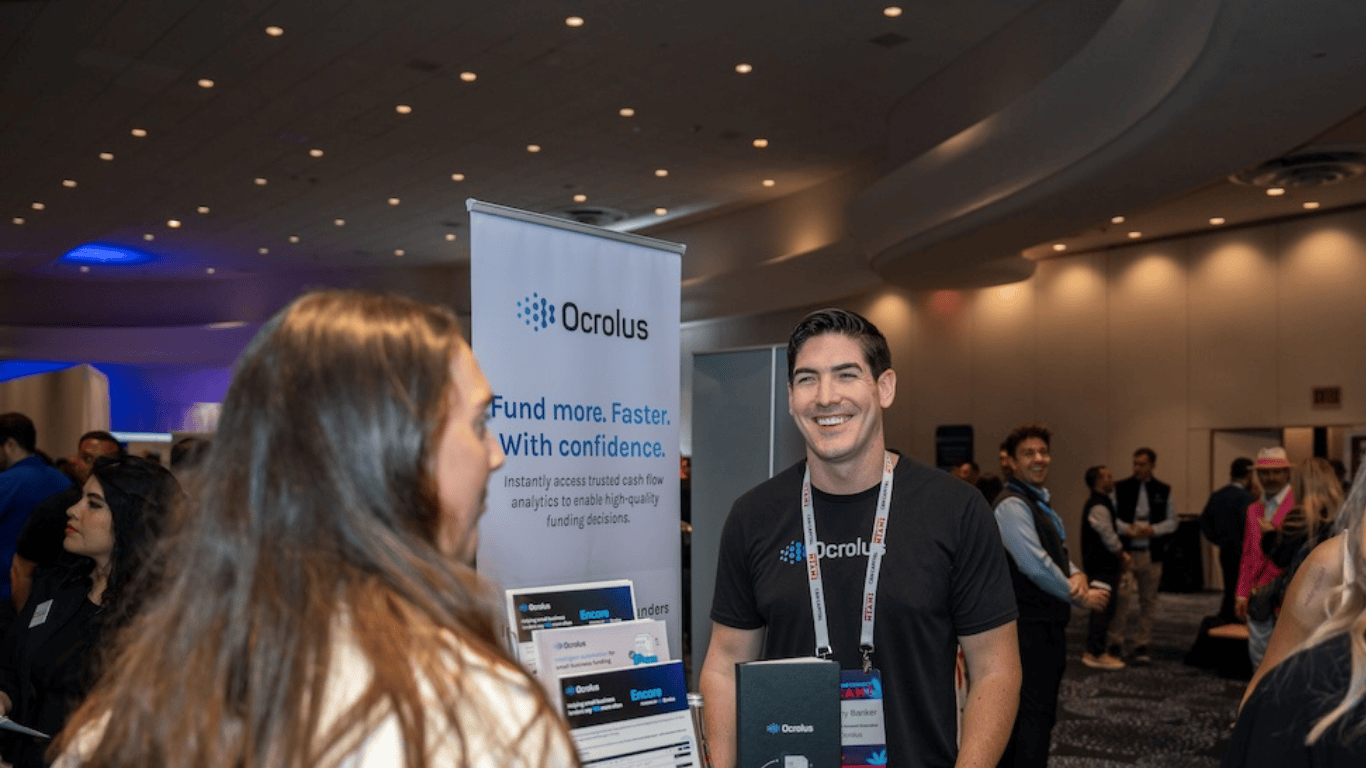
On the adjacent tech demo stage, Ocrolus presented their Encore platform. Encore takes a different angle: rather than automating broker workflows, it standardizes the data layer connecting brokers and funders.[3]
Encore is a double opt-in borrower intelligence sharing platform. It standardizes cash flow analytics so that when a business submits financial data to one funder, that same verified analysis can be shared with others through a common format. David Snitkof, Ocrolus's General Manager of SMB, presented the platform at deBanked CONNECT, with early adopters including Lendio already in production.[3] [4]
What This Means for Funders
Between Heron on the broker workflow side and Ocrolus on the data standardization side, a clear pattern is emerging: the infrastructure connecting brokers and funders is being automated and standardized at pace. Brokers have historically been buried in manual portal work, email management, and spreadsheet tracking. Tools like these free them to route deals more strategically and work with funders who make it easiest to close.
Funders who still rely on manual intake processes, slow response times, or unclear underwriting criteria are going to feel the pressure. The competitive advantage is shifting from "who has the best broker relationships" to "who has the best infrastructure for brokers to work with."
Bitty Advance: Title Sponsor Again and Approaching a Potential Ownership Shift

Bitty Advance was the sole Title Sponsor at deBanked CONNECT Miami 2026, the highest sponsorship tier at the event.[1] Their VP of Operations, Daniel Dames, joined the Funding Deals panel on the main stage alongside Fundkite CEO Alex Shvarts, Fundfi CEO Efraim Kandinov, and moderator Seth Denison from Optimum Bank. Bitty also had a dedicated "Word From Our Sponsor" speaking slot and sponsored the closing Kosher Networking Reception.[1]
That level of event investment is not an anomaly. Bitty held the Title Sponsor position at the January 2024 deBanked CONNECT Miami event at the Miami Beach Convention Center as well.[5] This is a company that has made consistent, visible commitments to being at the center of the industry's most prominent gathering, year after year.
The OppFi Angle
What makes Bitty's trajectory particularly interesting is the capital structure behind them. In August 2024, publicly traded OppFi acquired a 35% stake in Bitty for $15.25M in cash plus $2.7M in stock.[6] That transaction valued Bitty at approximately a 6x multiple on $8.5M in adjusted net income for the trailing twelve months ending March 2024.
The scale is worth noting. Bitty originated approximately $165M in revenue-based financing in 2023 and has funded $420M to over 29,000 merchants since inception.[6] By late 2024, OppFi reported being "encouraged by early results" with the investment.[7] By October 2025, the language had shifted to calling Bitty "a great partner."[8]
OppFi holds the option to acquire majority control of Bitty in 2027.[6]
What This Means for the Competitive Landscape
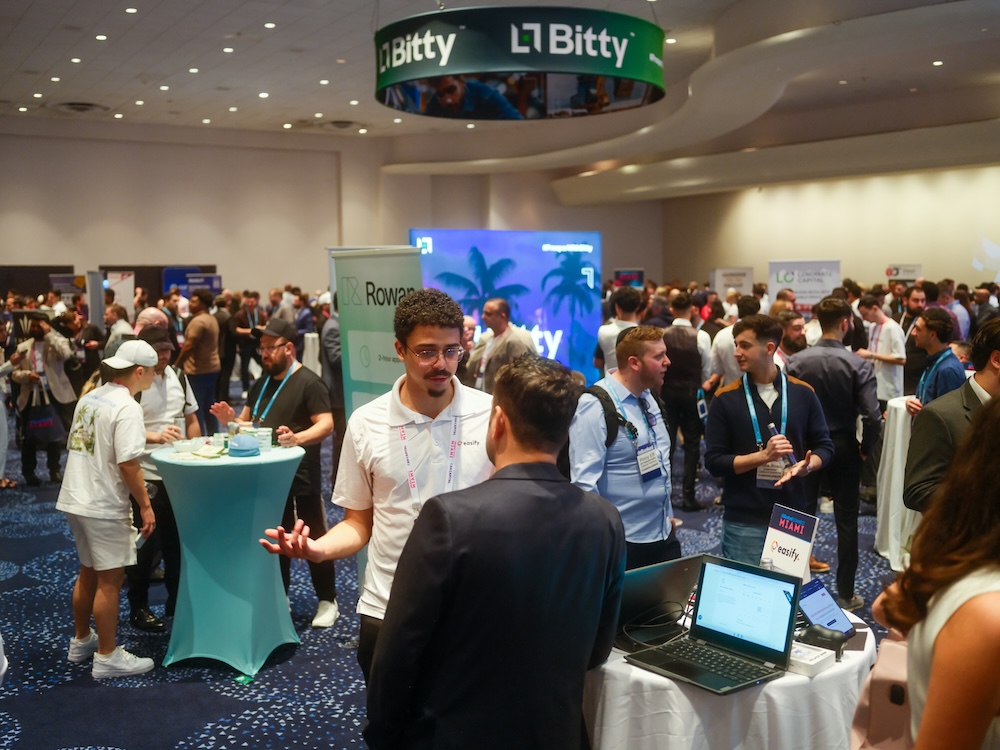
Bitty's continued high visibility at industry events, combined with OppFi's public company backing and the approaching 2027 option date, points to a company building toward either a full acquisition or a significant scale-up. For other funders in the MCA and revenue-based financing space, that means a competitor with access to public company capital, public company reporting infrastructure, and public company investor expectations is entering or deepening in your market.
That trajectory is worth watching regardless of your position in the industry.
Idea Financial Is Scaling Through ISO Channels with a Differentiated Product
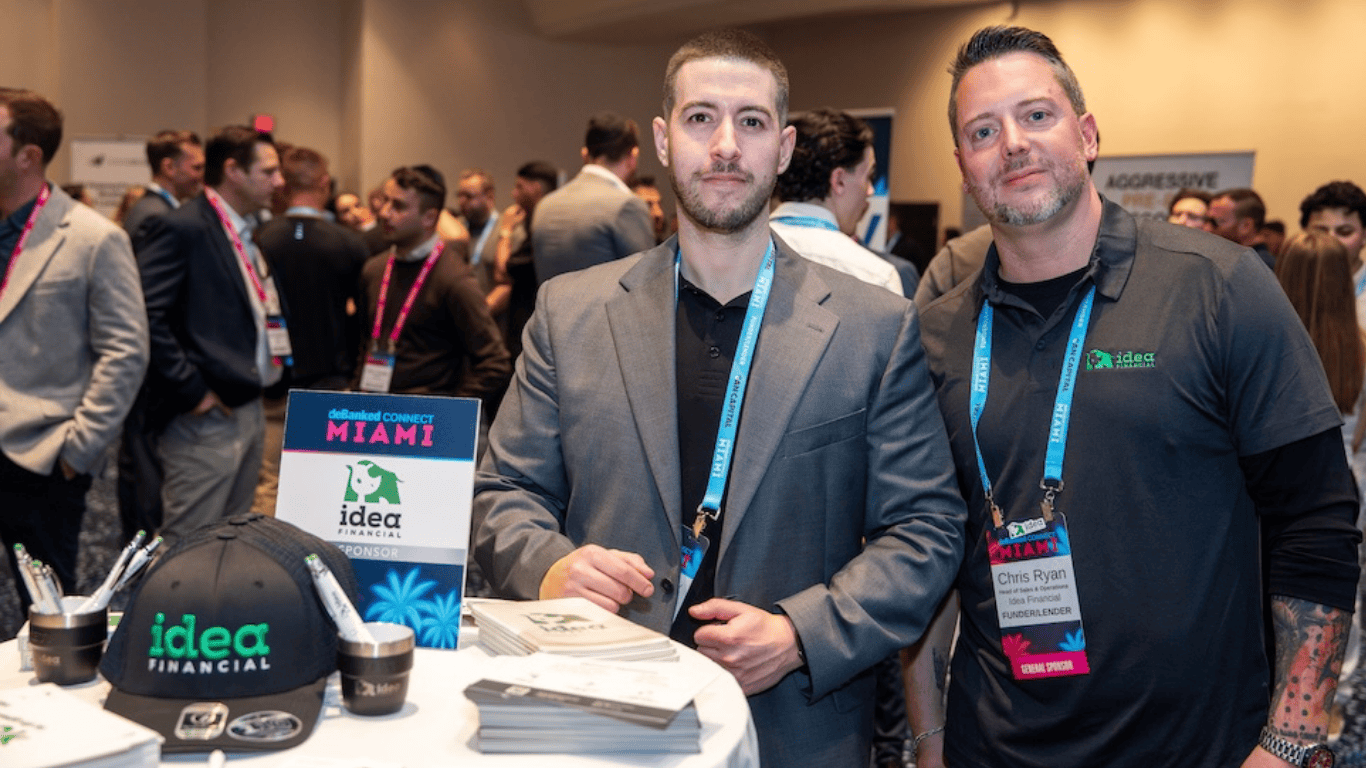
Idea Financial was a General Sponsor at deBanked CONNECT Miami 2026.[1] Their presence at the event reflects a broader growth strategy that sets them apart from most funders operating in the alternative lending space.
A Different Product in a Crowded Market
Where most alternative funders offer MCAs or fixed-term advances, Idea Financial offers a true revolving line of credit. After every payment, the available credit replenishes.[9] That is a meaningfully different product from a merchant cash advance or a standard term loan, and it appeals particularly to larger, rate-sensitive businesses that need ongoing access to capital rather than one-time funding events.
The company surpassed $1 billion in business funding in 2025, having funded over 10,000 businesses since its 2017 inception.[9] [10]
Capital Trajectory: Warehouse Facility, EverBank, and a Growing Balance Sheet
The $1B milestone did not happen in a vacuum. In October 2024, Idea Financial secured a $50 million warehouse facility from Performance Trust Capital Partners, which increased their maximum loan limit to $350,000 and opened a new capital channel through community banks. Larry Bassuk, Managing Director at Performance Trust, said at the time: "Performance Trust has opened up an entirely new market for Idea Financial through their deep relationships with smaller community banks."[12]
Then in January 2026, Idea closed a $20 million corporate term loan from EverBank to accelerate growth across both its core small business lending division and its legal financing arm, LevelEsq.[13] The legal financing expansion is worth noting: it signals that Idea is not just scaling the same product to more merchants, but diversifying its revenue streams into adjacent verticals.
Texas as a Competitive Advantage
There is one more angle that separates Idea from the broader MCA market. Because Idea Financial offers term loans and lines of credit rather than merchant cash advances, they are not impacted by the Texas sales-based financing disclosure legislation that has constrained MCA funders in one of the country's largest markets.[10] In a state that represents a massive share of small business lending volume, that regulatory positioning is a competitive advantage that MCA-only funders cannot replicate without changing their product structure.
ISO-Driven Growth
Director of Revenue Julian Hernandez has said publicly that 97% of Idea Financial's business comes through ISO channels.[11] That is an unusually high concentration for a funder of this size, and it speaks to how deliberately they have built their broker and referral network.
Hernandez has emphasized that face-to-face relationship building is central to the company's distribution strategy. "Face-to-face is a must in this industry," he told deBanked in late 2025, describing how he regularly travels to meet referral partners in person and attend industry events.[11] That philosophy explains why an event like deBanked CONNECT is strategically important for Idea: it is exactly the kind of venue where broker relationships get built, reinforced, and expanded.
What This Means for Competing Funders
If you are working the same ISO and broker networks, Idea Financial is actively expanding their footprint with significant plans for 2026. Their product is distinct enough to stand out in a broker's portfolio. They are not competing head-to-head on standard MCA terms; they are offering something brokers can pitch to a different segment of their merchant base: businesses that want a credit line, not a lump sum.
The capital trajectory tells the fuller story. A $50M warehouse facility in late 2024, a $20M corporate term loan from EverBank in early 2026, a $1B cumulative funding milestone, and a new legal financing division through LevelEsq. This is not a funder running the same playbook at higher volume. It is a company that is well-capitalized, diversifying into adjacent verticals, and structurally positioned to operate in markets where MCA-only competitors face regulatory headwinds.
What the Event's Growth Tells Us About the Industry
Step back from the individual companies and look at the aggregate numbers. deBanked CONNECT Miami grew from 461 attendees in 2019 to over 1,000 registrations in 2026.[1] The event moved from the Miami Beach Convention Center to the Fontainebleau. The sponsor count exceeded 60. Two concurrent session tracks ran simultaneously for the first time. This growth did not happen by accident, and the patterns within it are worth reading closely.
The Industry Is Professionalizing
Events of this scale, with this many sponsors investing in brand visibility, speaking slots, and hospitality, indicate an industry that has moved well past its startup phase. Companies are allocating marketing budgets, hiring dedicated relationship managers, and treating industry conferences as strategic investments rather than optional networking opportunities. The presence of structured panels, formal tech demo stages, and tiered sponsorship packages reflects a market that is organizing around professional norms.
The 50-minute keynote on "Merchant Protection Concerns for 2026" by Robby Birnbaum of Greenspoon Marder was the longest single session of the day.[1] When a regulatory compliance session draws the most time on the main stage at an industry event, it signals that compliance infrastructure, including state-level verification, is becoming a baseline requirement rather than a differentiator.
The Technology Layer Is Getting Crowded
Eight companies ran live technology demonstrations at deBanked CONNECT 2026, each presenting twice across two rounds to accommodate attendee demand.[1] The categories represented included document processing and cash flow analytics (Ocrolus), broker workflow automation (Heron Data), CRM and operations platforms (Cloudsquare, OnyxIQ, Dragin, Smart MCA), lending and capital markets infrastructure (Figure), and collections technology (Receivabull).
That density of technology vendors at a single event tells you the infrastructure layer of alternative lending is attracting serious investment and competition. Funders and brokers will have more tools to choose from in 2026, but they will also face increasing pressure to adopt them. The organizations that invest in their technology stack will process deals faster, respond to brokers more quickly, and capture better data on their portfolios. The ones that wait will find themselves at a structural disadvantage that personal relationships alone cannot overcome.
The Broker-Funder Relationship Is Being Reshaped
This is the thread that runs through the entire event. The Heron demo showed broker workflows getting automated. The Ocrolus Encore platform showed data sharing getting standardized. The Funding Deals panel discussed how volume leaders are operating at scale. The broker-focused sessions ("Becoming a Successful Broker" and "Broker Tips, Tricks, and Strategies") occupied two of the four General Session time slots, underscoring how central the broker channel has become to deal flow.
Taken together, the signal is consistent: the broker-funder relationship is moving from a purely relational model to a technology-mediated one. Funders who treat broker relationships as purely personal, without investing in the technology and data infrastructure that brokers are now adopting to route and manage deals, are going to lose ground to competitors who make it easier, faster, and more transparent to do business with them.
Cobalt Intelligence Customers on the Ground
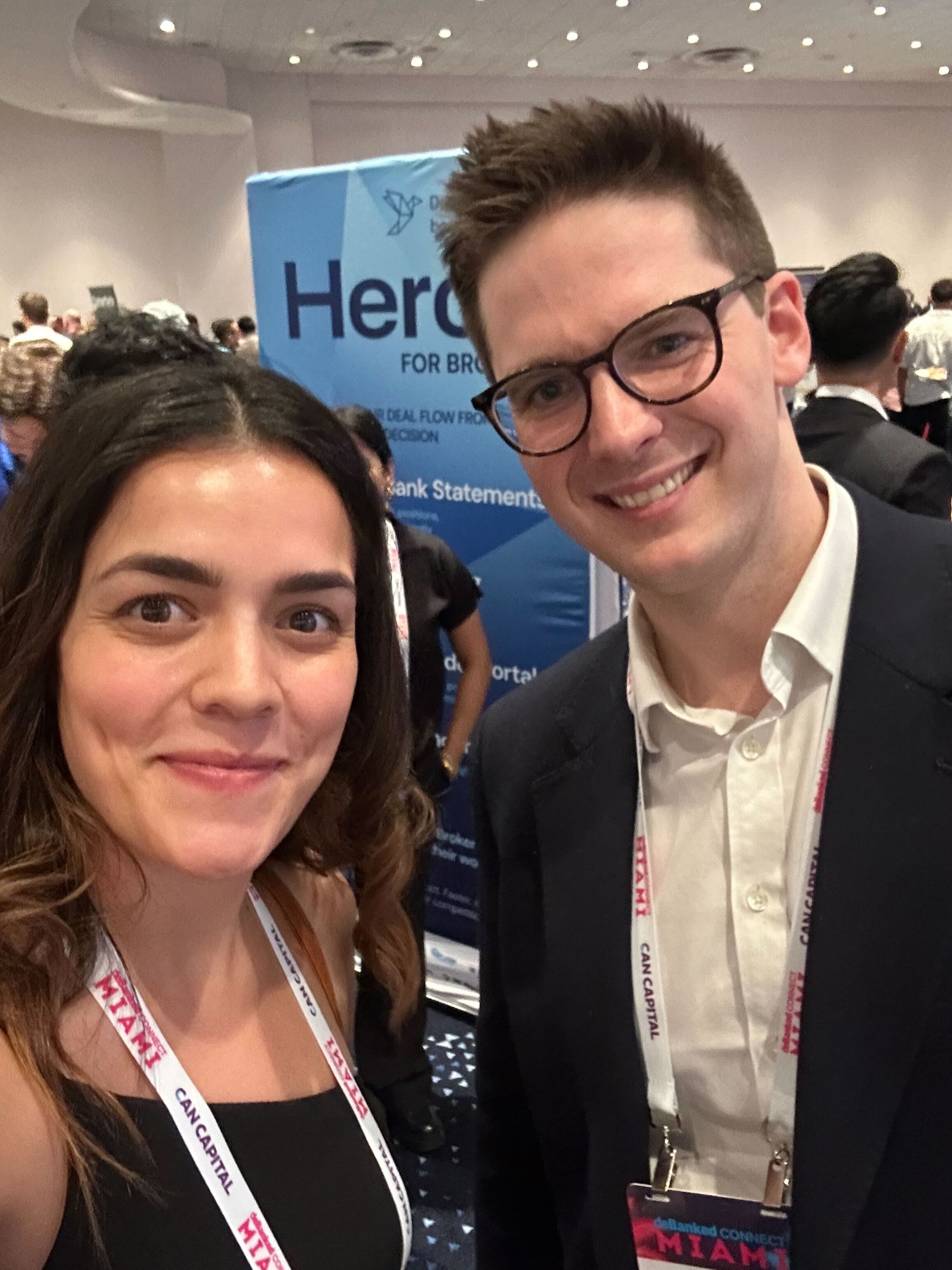
Three Cobalt Intelligence customers were among the sponsors at deBanked CONNECT Miami 2026: Bitty Advance (Title Sponsor), Idea Financial (General Sponsor), and Heron Data (General Sponsor and tech demo presenter). We are proud to work with companies investing at this level in the industry, and seeing their growth reflected on the industry's biggest stage reinforces what we hear from lending teams every day: operational automation is no longer optional.
Our Customer Success Manager, Patricia, was at the event too. The analysis in this blog reflects her observations on the ground.





.jpg)


.png)