


Executive Summary: Restaurants sit at an awkward intersection for alternative lenders: they are among the highest-volume applicant categories in merchant cash advance and short-term business funding, and they operate on some of the thinnest margins in the economy. That combination means the litigation record attached to a restaurant borrower carries more predictive weight than it does for a staffing firm or a wholesale distributor, but only if you know which case types actually matter. This article breaks down the four filing categories that show up most often on restaurant files, explains why two of them are high-signal and two are close to noise, and covers how to pull that data programmatically inside the two jurisdictions where it is currently available.
Why does the restaurant category need its own litigation read?
Most underwriting teams apply one court-record policy across every industry they fund. A judgment is a judgment, a lawsuit is a lawsuit, and the file gets flagged the same way whether the applicant is a plumbing contractor or a taqueria. That approach wastes the signal, because the base rate of litigation in food service is structurally different from almost every other small-business category.
What makes restaurant economics different from other borrower types?
The National Restaurant Association's 2026 outlook put industry sales at roughly $1.55 trillion across more than one million outlets, with employment projected near 15.8 million.[1] Size is not the problem. Margin is. In the same research, 42 percent of operators reported their establishment was not profitable in the prior year, and roughly 60 percent said customer traffic had softened.[1] More than nine in ten named food, labor, insurance, energy, and card processing fees as significant pressures on the business.
The Association's operations research puts a typical pre-tax margin near the mid single digits, with full-service concepts often running lower than quick-service.[2] A business operating at a three to five percent pre-tax margin has almost no absorption capacity. A two-month sales dip that a distributor would ride out becomes a solvency event for a restaurant, and solvency events generate court filings on a predictable schedule.
Why is the failure-rate conversation so often wrong?
The folklore number, that ninety percent of restaurants fail in year one, is not supported by any current dataset. Datassential's tracking of first-year closures found the rate falling sharply through the 2020s, reaching under one percent in 2025 by their measure.[3] Other datasets put first-year failure in the mid teens to low thirties depending on definition and market. The spread itself is the point for an underwriter: category-level failure statistics are too noisy to price a single file. What is not noisy is the filing record on the specific entity in front of you, which is why the court check earns its place in the stack.
What does restaurant failure look like in sequence, and where do courts enter?
Restaurants do not fail all at once. They fail in a recognizable order, and each stage leaves a different kind of paper trail. Understanding the order is what lets you separate a restaurant that is having a bad quarter from one that is eighteen weeks from dark.
What is the typical order of missed obligations?
Operators triage in a consistent pattern when cash gets tight. Payroll goes out first, because staff walk immediately and the restaurant cannot open without them. Food and beverage suppliers get paid next, or at least partially, because the delivery truck stops otherwise. Rent is where the deferral usually starts, because a landlord's remedy takes weeks or months to execute while a produce vendor's remedy takes one morning. Sales tax and payroll tax obligations often slip alongside rent. Debt service on advances and loans is frequently the last thing to stop, because the daily or weekly holdback is automatic and the operator does not get a choice until the account is empty.
That ordering has a direct consequence: by the time a funder sees a missed remittance, the restaurant has typically already been in rent arrears for a meaningful stretch. The court record is upstream of your own payment data.
Why does that make court filings a leading rather than lagging indicator?
A landlord's nonpayment or holdover petition is filed after internal demand has failed, which means it is dated well before the borrower's payment behavior visibly deteriorates on your side. Our related analysis of civil court filings as early warning signals for portfolio risk covers the general mechanics; restaurants are the category where the lead time is longest and most reliable, because the rent obligation is large, fixed, monthly, and legally enforceable through a process that generates a public docket entry.
Why is a landlord proceeding the earliest hard signal?
If you only add one filter to a restaurant file, make it commercial landlord-tenant actions. Nothing else in the public record correlates as tightly with a restaurant closing.
What do commercial landlord actions actually look like on a docket?
Two forms matter. A nonpayment proceeding is brought when a valid lease exists and rent has not been paid; the landlord must serve a rent demand before commencing, then seeks a judgment of possession plus a money judgment for arrears. A holdover proceeding is brought when the tenancy has been terminated, often after a notice to cure went unanswered, and the landlord seeks possession regardless of whether arrears are the underlying cause. In practice a holdover on a restaurant almost always has money behind it.
Commercial tenants in New York City hold far fewer statutory protections than residential tenants, which is why these proceedings move relatively quickly and why they get filed rather than negotiated indefinitely. That gap has drawn legislative attention: a 2025 bill in the New York State Senate proposed good-cause protections for small commercial premises under 1,000 square feet of retail space in New York City, with failure to pay rent expressly constituting good cause.[4] The existence of the bill tells you how routine these removals have become.
How should you weight a landlord filing against the rest of the file?
Treat it as the highest-weight item in the restaurant litigation set. Specific handling that holds up in practice:
• Any active nonpayment petition. Escalate to manual review regardless of bank statement strength. Deposits look fine right up until the doors close.
• A holdover proceeding. Treat as more severe than nonpayment, because it usually means the cure window already passed.
• Filing within the last 90 days. Weight heaviest. Restaurant distress moves fast and a stale 2022 petition on a since-renewed lease is a different fact.
• Repeat petitions from the same landlord. A pattern of filed-and-settled proceedings signals chronic arrears management, not a one-time dispute.
• A judgment of possession already entered. Treat as disqualifying for new exposure until the operator documents a resolution, because the lease is the single asset the concept cannot replace.
• A filing against the guarantor personally under a good-guy clause. This reaches the individual behind the entity and changes the recovery picture on any personal guarantee you hold.
New York's trial courts logged roughly 1.89 million new filings in 2024, and landlord-tenant volume is a large share of that.[5] The records exist and are searchable through the state's electronic filing system.[6] The operational problem has never been availability. It has been that a human has to go get them.
What do supplier and food distributor collection suits reveal?
The second high-signal category is collection litigation from food and beverage suppliers, equipment lessors, and linen or waste service vendors.
Why do supplier suits carry different information than landlord actions?
A supplier suit tells you the operator has already exhausted trade credit. Food distributors are not eager litigants; they would rather move a delinquent account to cash on delivery and keep selling. When a distributor files, it usually means the account was cut off, the balance was material enough to justify counsel, and informal collection failed. That is a later-stage signal than a rent petition but a more definite one, because the vendor has concluded the relationship has no future value.
Equipment lessors behave similarly. A walk-in cooler or espresso system under a capital lease generates a replevin or money action when payments stop, and those filings tend to cluster with other distress markers on the same entity.
How do you separate a real distress signal from a routine trade dispute?
Look for three things. First, is the plaintiff a supplier the restaurant would need to keep operating? A produce or protein distributor suing is worse than a signage vendor suing. Second, is the claim for goods sold and delivered, or is it a warranty or quality dispute? The first is a payment failure; the second may be a legitimate contested matter. Third, are there multiple supplier plaintiffs within a rolling twelve months? One is a dispute. Three is a pattern, and the pattern is what should move your decision.
How should wage and hour claims change a restaurant decision?
Wage and hour litigation is unusually dense in food service, which means both that you will see it often and that seeing it once should not by itself sink a file.
How common is wage litigation in food service?
The Department of Labor's Wage and Hour Division recovered more than $259 million in back wages for nearly 177,000 workers in fiscal year 2025, an average of about $1,465 per worker and the highest recovery total since 2019.[7] Restaurants are consistently overrepresented in that enforcement mix. Recent published actions include a Little Caesars franchise operator paying $409,457 in back wages to 32 workers for minimum wage and overtime violations,[8] and a Denver restaurant returning nearly $62,000 to 11 workers who were denied their full tips.[9] Tip credit rules, tip pooling, off-the-clock prep time, and overtime on split shifts are the recurring fact patterns, and they recur because the rules are genuinely intricate and the workforce turns over constantly.
New York City adds another layer of employment obligation on the fast food segment through its just cause protections, which the City Comptroller's office has analyzed in the context of continued industry job growth.[10] More rules means more exposure to claims that are compliance failures rather than solvency failures.
What is the right weighting for a wage claim?
Medium, with the weight coming from size and count rather than existence. A single individual wage claim on a 40-seat restaurant is close to background noise. A collective or class action covering multiple locations, or three separate individual claims filed within a year, is a different matter for two reasons: the aggregate liability can exceed a season of profit at a five percent margin, and a pattern of wage claims often indicates the operator is already managing cash by stretching payroll. That second inference is what makes it credit-relevant.
"If courts are cheap enough, then it's worth it to run on every application automatically." That framing, from Yehudah Aron at Cucumber Capital during a product evaluation, is the correct way to think about a medium-signal check. You do not need a court pull to be decisive on its own. You need it to be inexpensive enough that you can run it on the whole book and let the aggregate pattern do the work.
Evaluating whether a court check belongs in your restaurant flow? Cobalt's Court Case API returns New York State and Miami-Dade County filings at one credit per lookup, with free test jurisdictions so you can build the integration before spending anything. Book a demo to see the actual response payload against your own borrower names.
Why do slip-and-fall and liability actions mostly not predict credit risk?
The fourth category is the one most likely to cause a false decline, and it is the one to deliberately down-weight.
What does the premises liability data actually show?
Customer injury claims are the highest-frequency claim type restaurants face, and they are getting more expensive. Reporting on Verisk's general liability analysis describes annual severity climbing roughly 45 percent, from about $70,000 in 2020 to about $101,000 in 2024, with bodily injury driving the increase.[11] Verisk's own 2025 review found overall claim volume declining while risk grew more concentrated and severe.[12]
Here is why that does not translate into credit signal. A wet floor near a service station in a busy dining room is an ordinary operating hazard, and the ordinary response is that the general liability carrier defends and indemnifies. The restaurant's cash position is largely unaffected. A slip-and-fall complaint on a docket is evidence that the restaurant was open and serving customers, which is arguably a positive operating fact.
When does a liability action become credit-relevant?
Three narrow cases. When the claim type is one carriers commonly exclude or sublimit, such as assault and battery arising from a bar altercation or liquor liability in a dram shop action, the operator may be exposed directly. When there are numerous liability suits clustered in a short window, the concern is not the claims but the insurability, since the restaurant may be facing nonrenewal. And when a liability judgment has been entered and remains unsatisfied on the docket, that suggests coverage did not respond, which is worth asking about.
Outside those cases, a slip-and-fall filing should adjust your decision by close to zero. Coding it the same as a landlord petition is a modeling error that will cost you good files in exactly the markets where you see the most volume.
How do you actually pull this data without adding manual steps?
Everything above is analytically straightforward and operationally miserable, which is why most teams do not do it consistently. Knowing that a landlord petition is your best early indicator does not help if checking for one takes an analyst fifteen minutes per file.
What are the existing options and where do they break down?
Teams generally choose among a few paths. PACER covers federal courts, which is close to useless here because commercial landlord-tenant, supplier collection, and most wage matters are state court proceedings. Unicourt and similar aggregators offer broad multi-state coverage through a search interface and an API, with the tradeoff being aggregation lag and per-search cost that discourages running the check on every file. LexisNexis and Wolters Kluwer offer deep legal research with pricing and workflow built for law firms rather than for a decisioning pipeline. CSC and comparable corporate services providers handle registered agent and UCC work well and treat litigation search as an ordered service. Manual courthouse or clerk-portal search is the free option and the one that quietly does not happen at volume.
One MCA operator described the stitched-together version plainly during an evaluation: "we run New York court separately and then we run Unicourt, and then we run UCC searches," across roughly 500 files a day with volume expected to grow. Anthony at CorFinGroup framed the same problem from the buying side: "I'm looking for one cost effective solution for KYC and KYB," running 50 to 60 submissions a day with deep dives on 10 to 15. The friction is not that the data is unobtainable. It is that obtaining it requires three vendors, three integrations, and an analyst deciding case by case whether a file is worth the effort.
That integration friction is the specific problem Cobalt's Court Case API is built to remove for the jurisdictions it covers.
What does the Cobalt Court Case API actually cover?
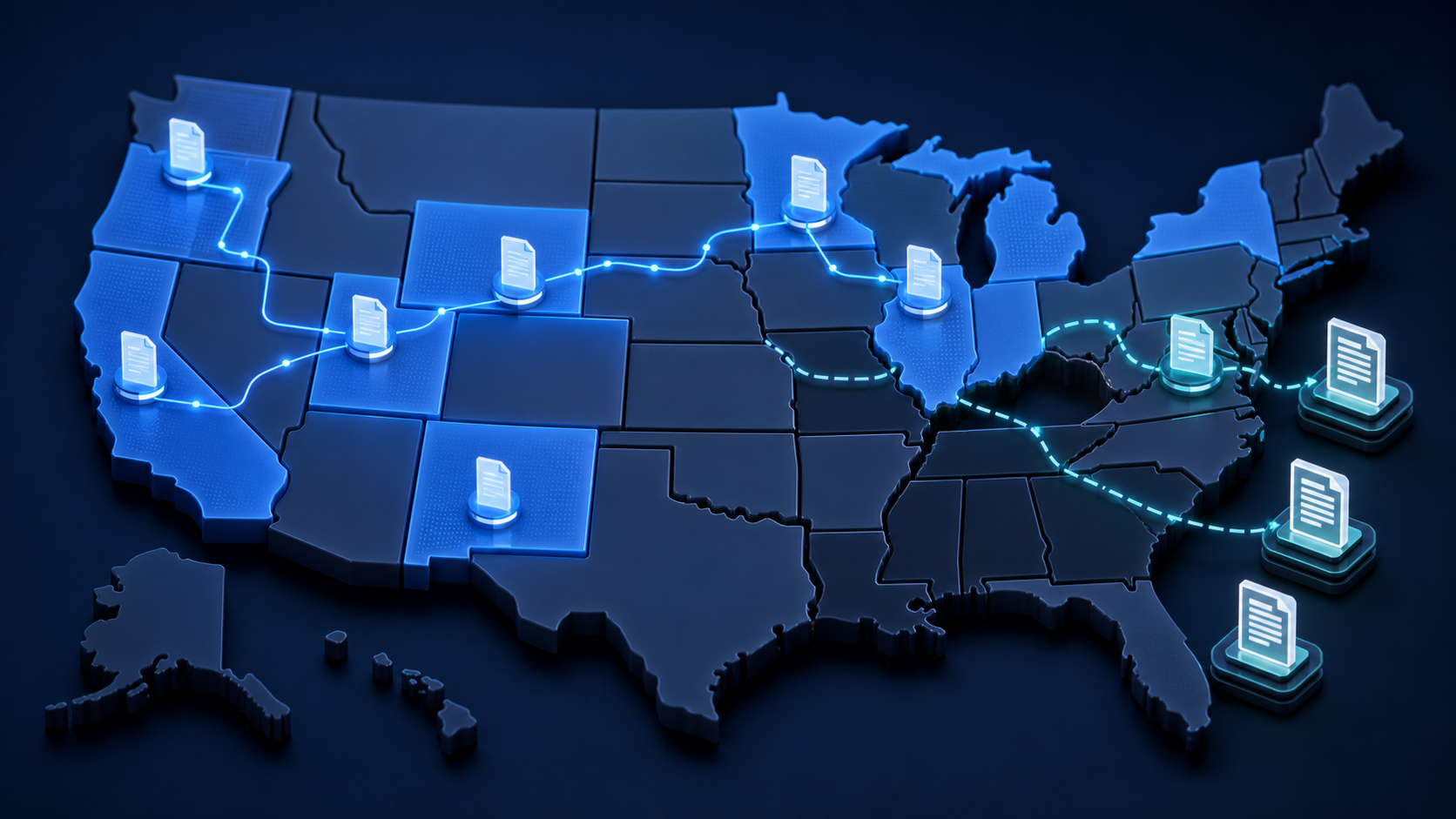
State this plainly before anything else: coverage is New York State and Miami-Dade County, Florida. That is the entire footprint. It is not nationwide, it is not federal, and it does not touch PACER. If your restaurant borrower is in Texas or Illinois, this API returns nothing useful for that file and you should use a different source.
The two-jurisdiction limit is demand-driven rather than arbitrary. Roughly 80 percent of Cobalt's funder customers file judgments in exactly these two places. New York is the center of alternative lending, and Miami-Dade became the second hub after a significant migration of funders to South Florida. Broader coverage is on the roadmap, including a human-assisted queue for unsupported jurisdictions that would trade speed for reach, but it has not shipped.
For restaurant lending specifically, the two covered jurisdictions happen to be unusually good ones. New York City's restaurant sector is one of the densest in the country and a long-studied part of the state economy.[13] Miami-Dade drew 28.3 million visitors in 2025 with a $32.2 billion economic impact, and its hospitality sector supported more than 216,000 jobs, about 10 percent of county employment.[14] If you fund restaurants in volume, a meaningful share of your book is already in one of these two markets.
New York carries one more advantage worth naming: it is the only state where Cobalt's Secretary of State data, UCC filing data, contractor licensing, and court records all overlap. For a restaurant file that involves a build-out contractor or a leasehold improvement lien, that overlap lets you resolve several questions from one vendor.
How does the call work in practice?
The endpoint is a single GET request. It is asynchronous by design, because the data is pulled live from the court site rather than served from a cache, so a `callbackUrl` is required and results post there when the pull completes. Typical completion runs 30 to 120 seconds. There is no synchronous mode, and there is no monitoring or alerting product layered on top; this is a lookup, not a subscription.
curl -G "https://apigateway.cobaltintelligence.com/courtCases" \
  -H "x-api-key: YOUR_API_KEY" \
  --data-urlencode "businessName=Hudson Street Hospitality LLC" \
  --data-urlencode "jurisdiction=newYork" \
  --data-urlencode "callbackUrl=https://underwriting.example.com/hooks/court-cases"
Swap `jurisdiction` to `miamiDade` for South Florida files, or to `testNewYork` and `testMiamiDade` to develop against sample payloads without consuming credits. Live lookups cost one credit each, the same as a Secretary of State pull. The response returns case number, case type and division, filing dates, parties, judgment details, and amounts where the underlying record includes them; not every court record carries a dollar figure, so parse defensively. Our court records API integration quickstart walks the callback handling end to end.
Where does the court check belong in a restaurant underwriting stack?
A court pull is one layer, not a decision. Cobalt supplies data; it does not score files or decide them, and any vendor claiming otherwise about court records should be treated skeptically given how uneven case metadata is across courts.
What is the practical sequencing?
Run Secretary of State first to confirm the entity exists, is active, and matches the name on the application. Run UCC next to see who already holds a position and how many. Run court records third, because the filings only become interpretable once you know the entity and the existing lien stack. Run TIN or EIN verification to tie the entity to its tax identity. The same layered logic applies across categories; our write-up on court records for equipment finance underwriting shows how the sequence changes when there is titled collateral involved.
What should the restaurant-specific policy look like?
Set weights explicitly rather than letting an analyst eyeball a docket list. A workable starting frame: landlord proceedings are high weight and trigger manual review; supplier and lessor collection actions are high weight when there are two or more or when the plaintiff is an essential vendor; wage and hour matters are medium weight and scale with count and class status; premises liability actions are low weight and generally informational. Recency matters more in this category than in any other, so decay the weight of anything older than about eighteen months.
Two honest objections worth acknowledging, both raised by real evaluators. Lara Hodgson at RoxWrite put it as "most of our clients are not in New York," and Cameron Kelliher at Elementix concluded "we'll stay away from the court stuff then. I wish the court stuff was rounded." Both are fair. If your restaurant book is concentrated in the Midwest or the West Coast, this check does not serve you yet. Gate Rock Capital's read was the opposite side of the same coin: "where I would pay $4 a pull is when you have the state index on court search." The value is entirely a function of where your borrowers are.
The regulatory backdrop is also worth keeping in view, because judgment records in this space are not static. New York's settlement with Yellowstone Capital cancelled $534 million in merchant debt and vacated court judgments across New York counties in batches through 2025.[15] Meanwhile Chapter 11 activity has been running at decade highs, with restaurant brands well represented.[16] A docket snapshot from last quarter may no longer describe the record accurately, which is an argument for pulling live at decision time rather than relying on a stored file.




.jpg)


.png)