


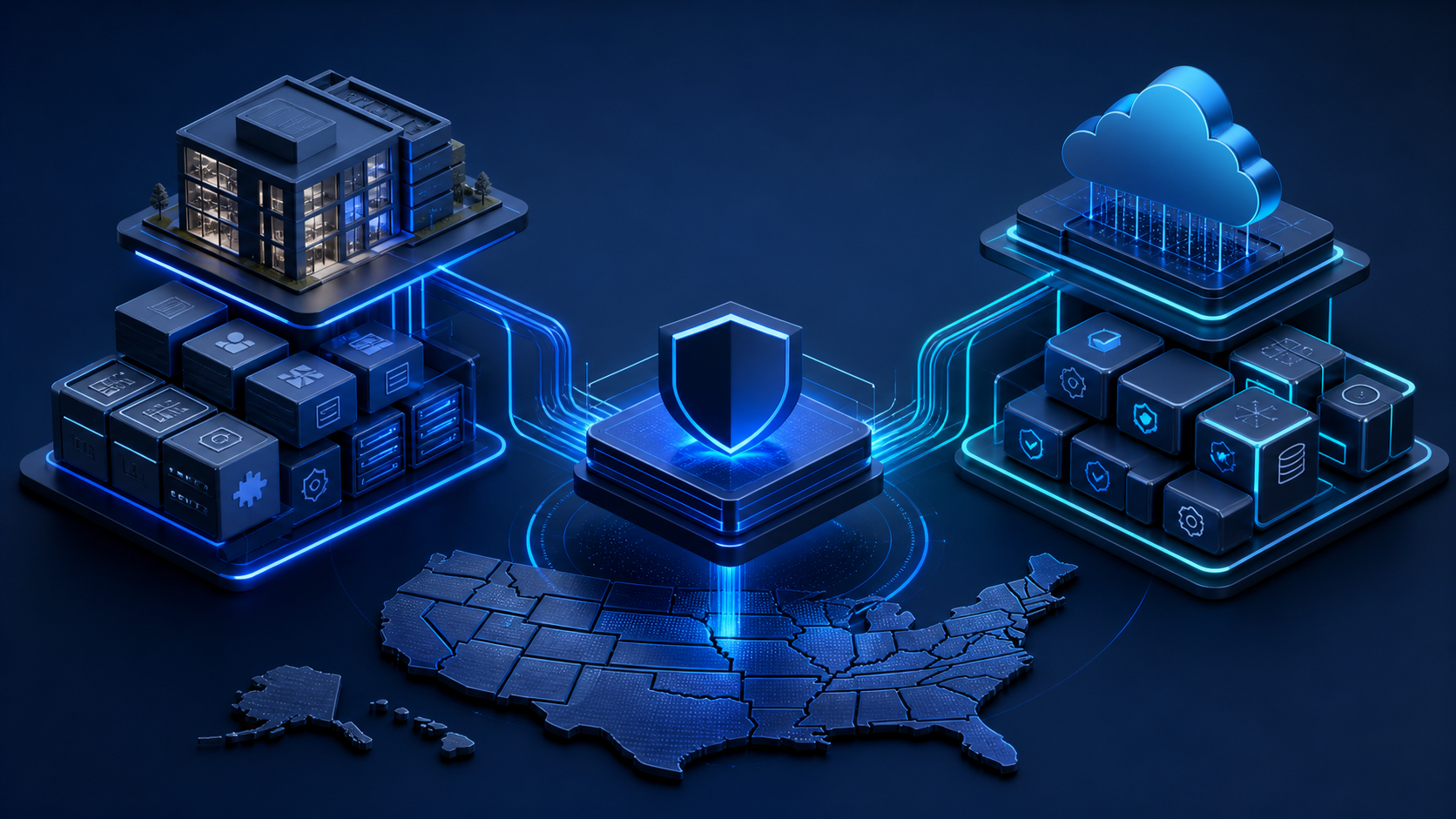
Executive Summary: The build-versus-buy decision for 50-state business verification is not about who can make the first request. It is about who should own source volatility, query rules, normalized evidence, exception operations, testing, and decision policy for years. A vendor can reduce source-integration work, but buying does not remove the lender's responsibility for intake, risk policy, fallbacks, evidence retention, and decisions. Building creates control, but it also creates a permanent source-operations function.
What Work Exists Behind One Search Box?
State systems differ in identifiers, name rules, status fields, access patterns, throttling, document availability, and maintenance. A production integration must own:
• Source discovery and authorized access.
• Query and identifier rules.
• HTML or API change detection.
• Retries, throttling, and async orchestration.
• Field and status normalization.
• Source evidence and screenshots where required.
• Testing and observability.
• Incident response and coverage communication.
• Retention and customer-facing policy.
The real unit of comparison is durable operating ownership, not endpoint count.
What Does Building Require?
An internal build needs a source registry for every state and DC, test entities, expected responses, change detection, release controls, and an operations route when a source fails.
Which costs should the model include?
Use the organization's own inputs for:
1. Initial source research and implementation.
2. Security and access review.
3. Test maintenance.
4. On-call and incident response.
5. Normalization governance.
6. Legal or compliance review.
7. Manual fallbacks.
8. Product and customer communication.
9. Data retention and audit support.
Do not compare a vendor fee with only the first engineering sprint. Compare full operating responsibility over the same period.
What Does Buying Still Leave Internally?
Buying can transfer much of the source acquisition and normalization work, but the buyer still owns:
• Correct subject and jurisdiction inputs.
• Coverage-aware routing.
• Meaning of state-specific fields in policy.
• Unsupported or unavailable fallbacks.
• Exception staffing and closure.
• Model use and final decisions.
• Vendor oversight and change management.
Cobalt's public documentation describes single-state SOS search and a Full Verification route that searches 50 states plus DC asynchronously when the state is unknown.[1] State-source limitations remain, and state-organized results do not make every state field uniform in meaning.
When Does a Hybrid Model Make Sense?
A hybrid model assigns ownership deliberately. A vendor may handle broad state access and normalized evidence while the lender builds customer-specific identity resolution, policy, review tools, and decisioning. The lender may retain a specialized direct source for a critical jurisdiction or evidence type.
What should the responsibility matrix name?
| Responsibility | Build owner | Vendor owner | Shared control |
|---|---|---|---|
| Source access | Internal team | Provider | Contract and monitoring |
| Query rules | Internal team | Provider | Input validation |
| Normalization | Internal team | Provider | Mapping review |
| Coverage incidents | Internal on-call | Provider support | Escalation SLA |
| Fallbacks | Operations | Optional provider route | Policy approval |
| Decisioning | Lender | None | None |
The matrix should reflect the actual design rather than a preferred procurement label.
How Should Source Volatility Be Tested?
Maintain test entities representing active, inactive, foreign, renamed, ambiguous, and no-match cases. Validate expected identifiers and source evidence, not only HTTP success.
California publishes specific status definitions and distinguishes foreign-entity status in California from status in the formation state.[2] SBA guidance separately explains formation and foreign qualification.[3] These differences are business logic, not merely connector plumbing.
What Questions Should Buyers Ask Vendors?
• Which sources and access methods support each jurisdiction?
• Which inputs are required or optional by state?
• How are source unavailable and no match separated?
• How are alternatives returned?
• What source evidence and timestamps are retained?
• How are schema and coverage changes communicated?
• Which fields are not available or normalized?
• What happens when a source blocks access?
• How can the buyer reproduce a result?
• Which fallbacks remain the buyer's responsibility?
An honest limitation is more useful than a universal coverage slogan because it can become a routing rule and test.
How Should a Proof of Concept Be Run?
Use a representative test pack rather than only easy matches:
1. Known entity by exact identifier.
2. Common-name entity with alternatives.
3. Foreign registration.
4. Recent legal-name change.
5. Unsupported or degraded source.
6. No match.
7. Duplicate request.
8. Async result arriving out of order.
Compare raw evidence, normalized output, exception behavior, and reproduction steps. A successful demo request does not prove operational readiness.
What Should the Final Decision Record?
Document the responsibilities retained, responsibilities transferred, fallback ownership, security and retention design, test results, unresolved gaps, cost inputs, and review date. Avoid invented headcount savings or ROI figures.
What Should Teams Monitor After Selection?
• Source incidents by state.
• Fields mapping to unknown.
• Unsupported and manual-fallback volume.
• Time to identify and communicate source changes.
• Result discrepancies in shadow tests.
• Exceptions lacking reproducible evidence.
• Vendor or internal releases rolled back.
• Policy decisions made during degraded coverage.
What Is the Practical Build-Buy Test?
List every durable responsibility, price it using your own staff and vendor inputs, test difficult identity and outage cases, then choose the build, buy, or hybrid allocation that leaves every source, exception, and decision obligation with a named owner.
Cobalt can own documented source access and multi-state verification work. The lender still owns its subject data, workflow, risk rules, review operations, and decisions.
Ready to compare responsibilities using the same test pack? Schedule a Cobalt Intelligence demo and bring one clean state, one ambiguous entity, and one degraded-source scenario.





.jpg)


.png)