


Executive Summary: An automated underwriting system (AUS), sometimes called an automated underwriting platform, is software that pulls applicant data, runs it through risk rules and machine learning models, and returns an instant credit decision. If you want to try a working example in about thirty seconds without booking a demo, scroll to the free tool below. If you want to understand how these systems actually decide, what data they need to be reliable, and where most of them fall short for small business lending, the rest of this page walks through it in detail.
Try the free Cobalt Underwriter GPT
A custom GPT running on Cobalt's verification API data. Walks through a sample underwriting decision using real-time business records pulled directly from primary sources, so risk teams can see in practice what changes when the data layer is real-time and primary-source instead of cached. It is a GPT sandbox, not a production decisioning system, and we want you to know that going in.
Open the Cobalt Underwriter GPT →
Sandbox only. Not a production decisioning system. Not for live loan decisions.
What is an automated underwriting system?
The term automated underwriting system covers any software that automates the credit decision for a loan or insurance application. Investopedia defines it as the use of algorithms and statistical models to evaluate applications and produce a recommendation, typically Approve, Decline, or Refer for manual review. The mortgage industry's two canonical examples are Fannie Mae's Desktop Underwriter (DU) and Freddie Mac's Loan Product Advisor (LPA), both of which have been in production for decades.
You will see the terms automated underwriting system, automated underwriting platform, AUS, and AUP used interchangeably across the industry. If there is a working distinction in 2026 usage, "system" tends to refer to the decisioning engine itself (the rules and models that produce the verdict), while "platform" tends to refer to the broader software stack around it (loan origination, document handling, applicant portal, integrations). In practice, vendors use the labels as synonyms. We will too.
How an automated underwriting system actually works
Every modern automated underwriting system, regardless of vendor or label, runs the same four-step workflow. The differences between platforms show up inside each step, not in the order itself.
1. Data retrieval. The system pulls applicant and entity data from internal forms and external APIs. For consumer loans, that means credit bureaus, bank statements, and identity verification. For small business loans, it should also mean Secretary of State records, TIN/EIN verification, UCC filings, OFAC screening, and court records. Most platforms handle the consumer sources well. Most fall short on the business sources.
2. Algorithmic analysis. The system applies a combination of rules (hard cutoffs and policy logic), scorecards (weighted risk models), and increasingly machine learning models that learn from historical performance data. The mix varies by vendor. Some lean on rules and explainability. Others lean on ML and accuracy. The right balance depends on your regulatory exposure.
3. Instant decisioning. Within seconds, the system returns a recommendation. The standard outputs are Approve, Decline, or Refer for manual underwriting. Some platforms add conditional approvals tied to additional documentation.
4. Audit and compliance trail. Every decision generates a timestamped, defensible record showing which data sources were queried, which rules fired, and which model features drove the score. This is the part that matters when a regulator or plaintiff's attorney asks why you declined a borrower or approved a fraud.
The 5 data sources every automated underwriting system needs
An automated decision is only as good as the data it ingests. For small business and alternative lending, five data sources are non-negotiable. The first two are well-handled by most platforms. The last three are where the gaps live.
1. Credit bureau data
Personal and business credit pulls from Experian, Equifax, TransUnion, and Dun & Bradstreet. Necessary, but rarely sufficient for small business lending because business credit files are often thin or missing entirely.
2. Bank statement and cash flow data
Pulled via aggregators like Plaid or MX, or parsed from PDFs by tools like Heron Data. This tells you whether the business actually generates revenue and what the deposit volatility looks like.
3. Business entity verification
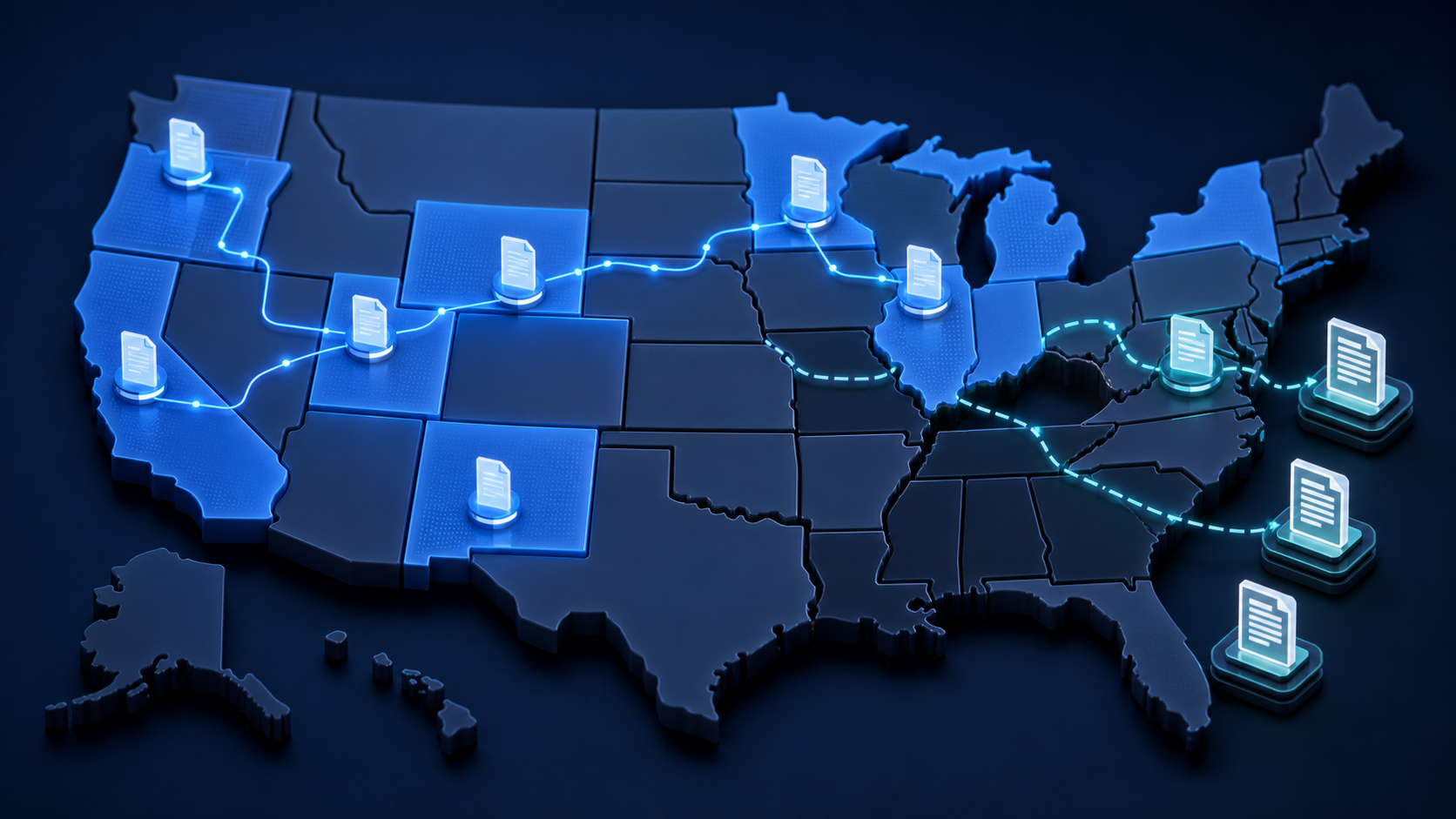
Real-time confirmation that the legal entity exists, is in good standing, has the right registered agent, owners, and address. Sourced from Secretary of State filings across all 50 states. This is where most platforms underinvest. Many use cached aggregator data that lags primary sources by weeks. Pulling directly from SOS records, in real time at query time, is the difference between catching a synthetic entity at application and discovering it at default.
4. UCC filings
Existing liens against the business or its assets. For asset-based lending, equipment finance, and merchant cash advance, this is foundational. UCC data must come from primary sources to be reliable. Stale aggregator feeds miss recent filings, which is exactly the case where you end up funding into second position behind a competitor you did not know was there.
5. OFAC, sanctions, and court records
Sanctions screening is a compliance requirement. Court records (judgments, bankruptcies, civil suits) are a risk requirement. Both should be matched against the verified entity and verified owners, not against names typed into a form. Name-only matching is the single biggest compliance gap in small business automated underwriting.
Automated underwriting for small business and alternative lenders
Most of the platforms most often searched as "automated underwriting systems" were built for mortgage or insurance carriers. Their assumptions show. They expect W-2 income, not merchant cash flow. They pull consumer credit, not primary-source business records. They underweight UCC filings, or skip them entirely. For an MCA shop, an ABL lender, an equipment finance company, or a fintech writing small business term loans, the off-the-shelf options leave a verification gap that creates fraud risk on one side and unnecessary declines on the other.
If you are evaluating automated underwriting platforms specifically for small business or alternative lending, the buyer's guide is a better starting point than this page. We wrote a separate 2026 buyer's guide to automated underwriting for small business and alternative lenders that compares LoanPro, TurnKey Lender, Zest AI, Heron Data, Docsumo, Underwrite.ai, and Blooma side by side, walks through the build vs buy decision, and lists the questions to actually ask vendors before signing.
When you outgrow the free tool: production-grade underwriting
The Cobalt Underwriter GPT linked above is a sandbox. It is genuinely useful for risk and underwriting teams that want to test the data layer against a real application without booking a vendor call, and it is free. It is not a production system, and it should not be making real loan decisions. A GPT-based tool does not have the audit trail, the SLAs, the throughput, the redundancy, or the regulatory documentation that live lending requires, which is exactly why we framed it as a sandbox from the top of the page.
What the sandbox does illustrate is the data layer itself. When business verification is pulled directly from primary sources in real time (Secretaries of State, IRS TIN/EIN matching, UCC filing offices, OFAC, court records), the decision changes. Synthetic entities get caught. Stale "good standing" statuses get flagged. UCC liens that aggregators missed show up. The free tool is a way to see that change without committing to a platform evaluation.
The same data powering the sandbox is available as a production API, with full audit trails, contractual SLAs, and 50-state primary-source coverage. Cobalt's verification API plugs into any existing automated underwriting platform or in-house decisioning engine. Real-time at query time. Not cached. Built for the throughput and documentation requirements of live lending, not the limits of a sandbox.
Plug a real verification layer into your underwriting stack
Cobalt's verification API delivers real-time SOS, TIN/EIN, UCC, OFAC, and court records to any automated underwriting platform or in-house build. 50-state coverage, primary sources, audit-ready.
Book a 20-minute walkthrough →
Technical walkthrough only. We review your states of operation, your existing data stack, and how the API would plug in. No deck.




.jpg)


.png)